TAKE A BREAKとは?— 音楽・ファッション・カルチャー・スニーカー・レコード、海外カバーまで多彩に楽しめるコラム
この「TAKE A BREAK」コーナーでは、音楽・ファッション・スニーカー・レコード・カルチャー・海外カバー・職人技・トレンドなど、ジャンルを問わず日常に彩りを添えるコラムや動画を紹介しています。
PENTHOUSE GROOVEのメンバーが実際に体験した“音楽だけじゃない話題”を通して、初めてこのサイトに訪れた方や音楽に詳しくない方もちょっと一息つきながら楽しめるように工夫しています。
「ファッション好き」「レコードコレクター」「海外カルチャー好き」など、どなたでもお気軽にお楽しみください。
そしてぜひ、PENTHOUSE GROOVEメインページ もチェックしてみてください!
On “TAKE A BREAK,” we introduce a wide variety of topics—from music, fashion, sneakers, and records to global culture, craftsmanship, and trend stories.
Even if this is your first time visiting PENTHOUSE GROOVE or you’re not a music enthusiast, we hope these columns and videos will inspire you when you take a break.
Fashion lovers, record collectors, culture enthusiasts—everyone is welcome!
Don’t forget to check out our main PENTHOUSE GROOVE page as well!
vol.11 CROSSCURRENTS
Photos






Videos
TAKE A BREAK Vol.11|CROSSCURRENTS
ハワイへ行く前、「ハワイの音楽」と聞いて自分の中にあったイメージは、今思えばかなり限られたものでした。
ウクレレ、スティールギター、フラ。もちろん、実際にハワイへ行ってみても、それらはこの土地の音楽を考える上で欠かせない存在でした。
ただ、レコードを探しながら音楽を掘っていくと、その少し外側に、想像していた以上にいろいろな音が広がっていました。Latin、Soul、Funk、Jazz、AOR、Exotica。ジャンルだけを見れば世界中に存在する音楽ですが、ハワイで作られたレコードを聴いていると、そのどれとも少し違う。
外からやってきた音楽が、そのままコピーされるのではなく、この土地の空気や人、文化の中を通ることで少しずつ形を変えている。
今回の旅で強く惹かれたのは、そうした「混ざり方」でした。
Augie Colón – Colón
https://www.youtube.com/watch?v=Hklkd6OFxk4&themeRefresh=1
最初に紹介したいのはAugie Colón。
ホノルル生まれのパーカッショニストで、Martin Dennyのグループでも重要な役割を担った人物です。Colónはパーカッションだけでなく、Martin Dennyの録音で特徴的に使われた鳥の鳴き声のような声でも知られています。1959年にはソロアルバム『Sophisticated Savage』を発表しました。
その中に収録されている「Colón」。
パーカッションや声、動物の鳴き声のような音が交錯し、そこに現れるのは、一般的に想像するハワイアン・ミュージックとはかなり異なる景色です。
現実のハワイを忠実に描いているというより、誰かの頭の中にしか存在しない南国。昔の録音なのに、どこか未来の音楽にも聞こえる。
Exoticaというジャンルは、実在する一つの土地をそのまま再現するというよりも、さまざまな場所や文化についての想像を混ぜ合わせながら、現実には存在しない世界を作り上げてきました。
だからこそ、70年近く前の録音でも古びきらず、むしろ今聴くと奇妙な新しさがあります。
Lemuria – Hunk of Heaven
https://www.youtube.com/watch?v=J48ctAIyoSw
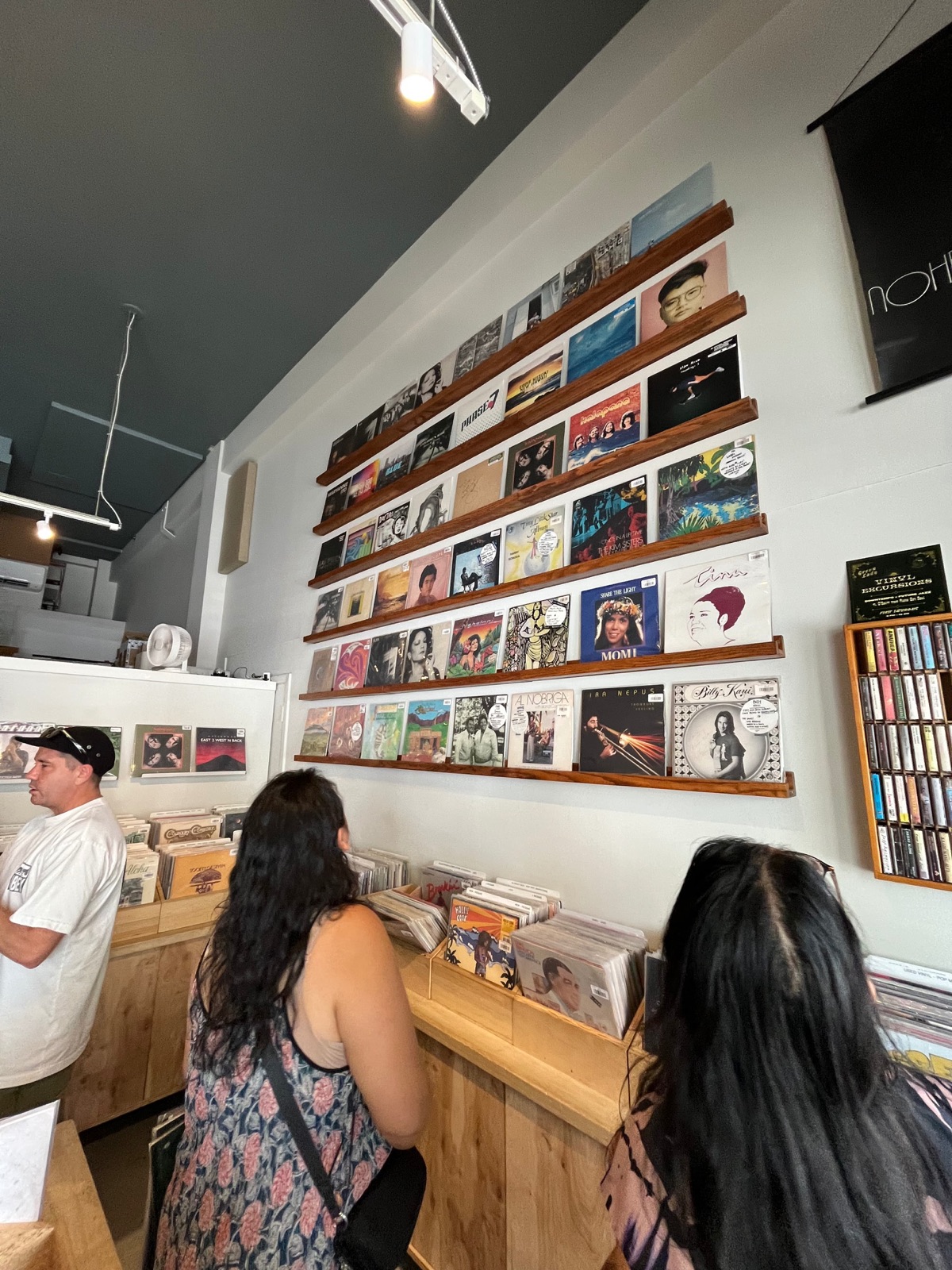
今回ハワイでレコードを探す中で、特に印象に残った店がAGSでした。
正式にはAloha Got Soulが運営するレコードショップで、ホノルルのMōʻiliʻiliにあります。
Aloha Got Soulは2010年にブログとして始まり、当初は1970〜80年代のハワイ産Jazz、Funk、Soul、R&Bを中心に掘り起こしていました。その後レーベルへ発展し、2021年には実店舗AGSをオープン。現在は「過去から現在までのハワイの音楽」を掲げ、世代やジャンルを横断してハワイの音楽を紹介しています。
実際に棚を見ていると、いわゆる王道のハワイアンだけではなく、SoulやFunk、Jazz、Reggae、Ambient、Experimental、Hip-Hopなどが同じ「ハワイ」という土地を軸に並んでいました。
今回自分が探していた音楽と、AGSという店のコンセプトはかなり近かったように思います。
その象徴の一つとして思い浮かぶのが、Lemuriaの「Hunk of Heaven」です。
1970年代後半のハワイから生まれたSoul / Funk / Rare Groove。Aloha Got Soulも以前からこの曲をHawaiian rare grooveを象徴する一曲として紹介してきました。
海外のSoulやFunkを思わせる部分がありながら、そのままではない。都会的なのに、音の間には余白があり、熱を持っているのに風が通っている。
AGSの棚を眺めながら、音楽そのものとは別に、しばらく思案に耽ったことがあります。
魅力的なもの、あるいは人の興味を惹くものを創作する時、何かと何かを掛け合わせることで生まれるユニークさや独自性が、そのもの自体のフックになるのではないかということです。
そして今回、さらに強く感じたのが、その掛け合わせは「王道×ニッチ」であることが一番面白いのではないかということでした。
王道×王道は分かりやすく、多くの人に届きやすい一方で、どちらもすでに見慣れたもの同士であるため、掛け合わせても変化に乏しく、独自性が生まれにくい。
反対にニッチ×ニッチは独自性こそ強くなりますが、その世界があまりにも深くなりすぎると、もともとそこに関心を持っている人以外にとっては入口そのものが見えにくくなる。
その中間にあるのが「王道×ニッチ」です。
誰でも知っているものの中に、少しだけ知らないものが混ざる。入口には親しみがあるのに、一歩入ると見たことのない景色がある。
Soulという普遍的なフォーマットにハワイというローカルな感覚が入り込む。ハワイアン・ミュージックにJazzやFunkが流れ込む。
そうした組み合わせには、単なる足し算ではない化学変化が起こりやすいように思います。
AGSでレコードを掘ることが楽しかった理由の一つは、そうした掛け合わせが棚の中に大量に存在していたからでした。
そしてこれは、音楽だけではなく、PENTHOUSE GROOVEで何かを作る時にもかなり重要な考え方だと感じました。
分かるものと、まだ分からないもの。親しみと違和感。王道とニッチ。その境目に、人を引っ掛けるフックが生まれる。
今回の旅から持ち帰ったのは、レコードだけではなかったように思います。
Country Comfort – Make It With You
https://www.youtube.com/watch?v=wnCv-MBWJEQ
Country Comfortの「Make It With You」も、今回の旅を経て自分の中で意味が変わった一曲です。
1975年の『We Are The Children』に収録された、David Gatesによる楽曲のカバーで、同作はSounds of Hawaiiで録音されています。
以前、PENTHOUSE GROOVEのDJ配信「mellow of shore」で父がこの曲を使用していました。
https://www.youtube.com/watch?v=TlkoDq_GKnc
今回ハワイの音楽を改めて調べる中でこの曲と再会し、そのことを父に話したところ、父自身も以前ヤン富田さんからこの曲を教えてもらったのだと聞きました。
ヤン富田さんから父へ、父からPENTHOUSE GROOVEへ。そして今回、ハワイへ行った自分が再びこの曲へ辿り着く。
この流れを知ってから、自分の中で「Make It With You」は特別な一曲になりました。
これからこの曲を聴くたびに、今回のハワイ旅行のことを思い出すだけではなく、父のことや、父から聞いたヤンさんとのつながりまで一緒に思い出すようになるのだと思います。
そこから、音楽というものの不思議な巡りについて考えるようになりました。
録音された音そのものは変わらなくても、聴く人の中では曲の意味が変化していく。
誰から教えてもらったのか、どこで聴いたのか、誰と一緒にいたのか、そして何年後にもう一度その曲へ辿り着いたのか。そうした記憶が一つずつ積み重なることで、同じ曲が少しずつ別の意味を帯びていきます。
音楽が人から人へ伝わるということは、単に音源が受け渡されることではなく、その周囲にあった記憶まで少しずつ継承されていくことなのかもしれません。
ピンク・パレスにもあった「混ざり方」
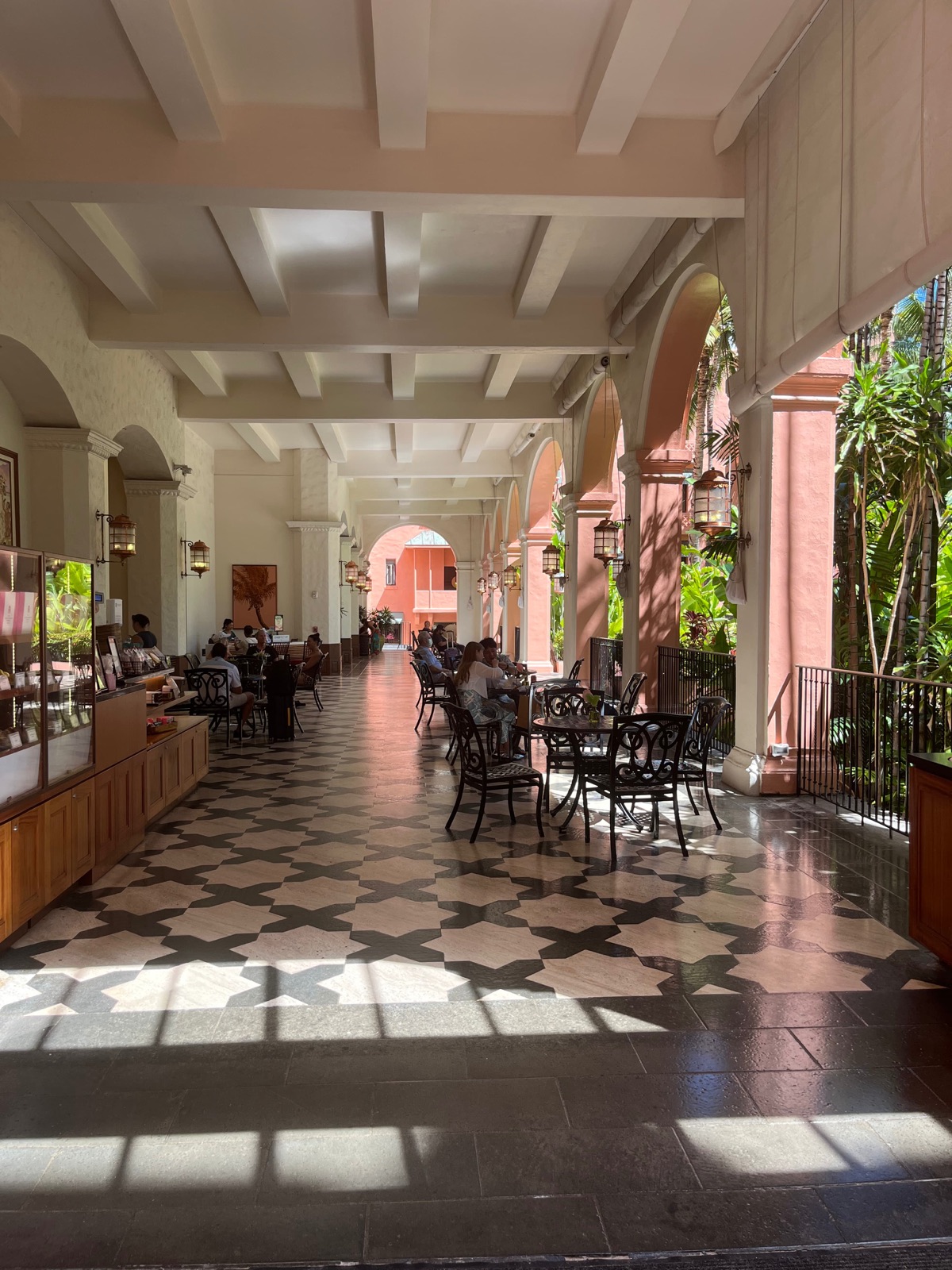
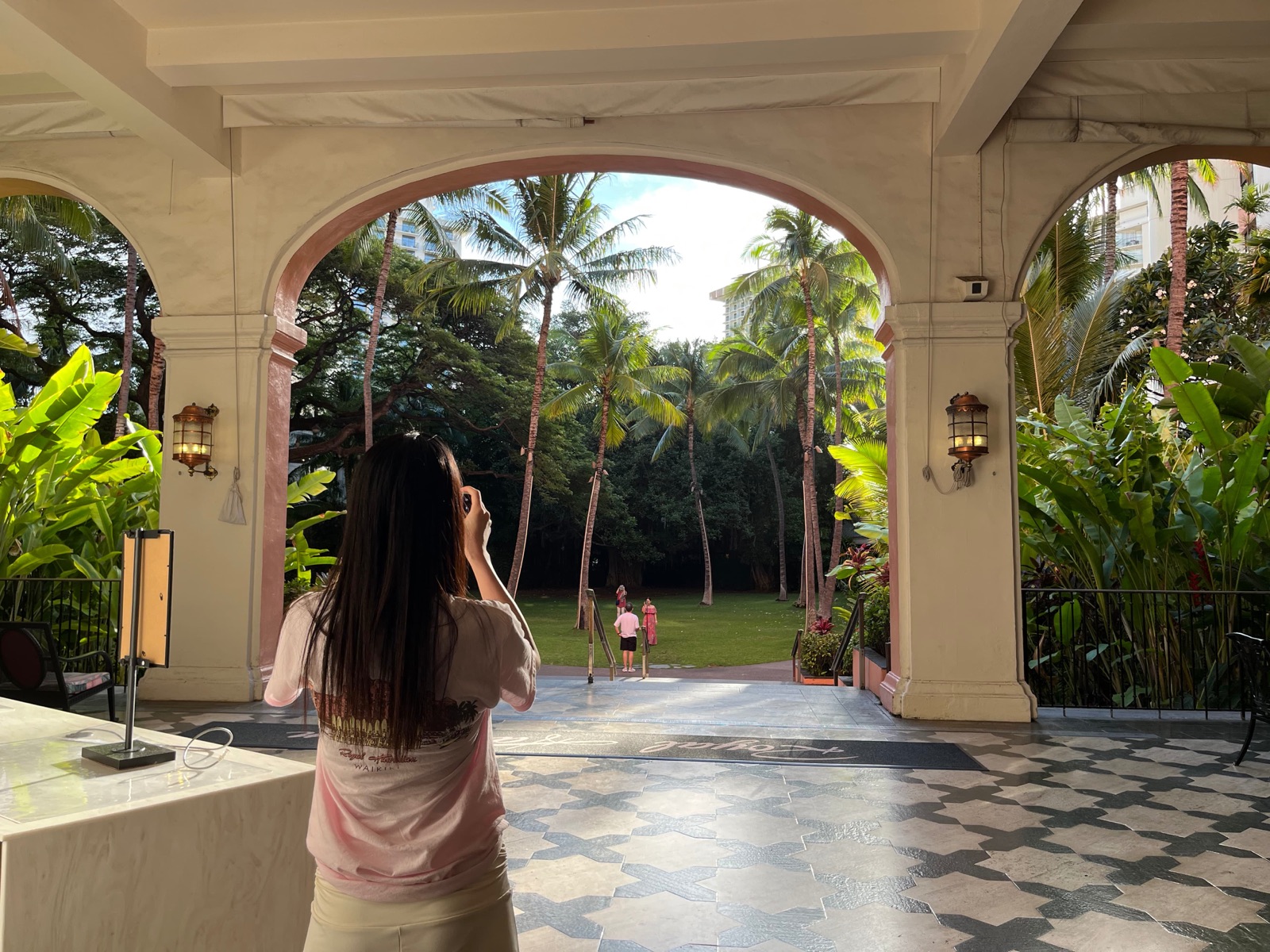
今回の旅では、ワイキキのロイヤル ハワイアンに宿泊しました。
「太平洋のピンク・パレス」と呼ばれるこのホテルは1927年2月1日に開業しました。マトソン社の豪華客船でハワイを訪れる旅行者の宿泊施設として始まり、当時400万ドルを投じ、18か月をかけて完成した6階建て・400室のホテルでした。
さらに遡れば、この場所自体にも別の時間が流れています。ワイキキが観光地として開発される以前、この周辺はハワイ王族にとって重要な居住・休養の地でした。カメハメハ1世の住居が現在のホテルの場所にあり、現在のココナッツ・グローブ付近にはカアフマヌの夏の離宮があったとされています。
しかし、そこに1920年代に建てられたホテルの姿は、伝統的なハワイの建築をそのまま巨大化したものではありません。
設計したのはニューヨークの建築事務所Warren & Wetmore。当時流行していたスパニッシュ・ムーア様式を取り入れ、映画スター、ルドルフ・ヴァレンティノの作品からも影響を受けたとされています。また、スパニッシュ・リバイバルとムーア様式から影響を受けた建築とも説明されています。
つまり、ハワイを代表するホテルでありながら、その建築自体が最初から、異なる土地や文化についてのイメージを混ぜ合わせたものだったということです。
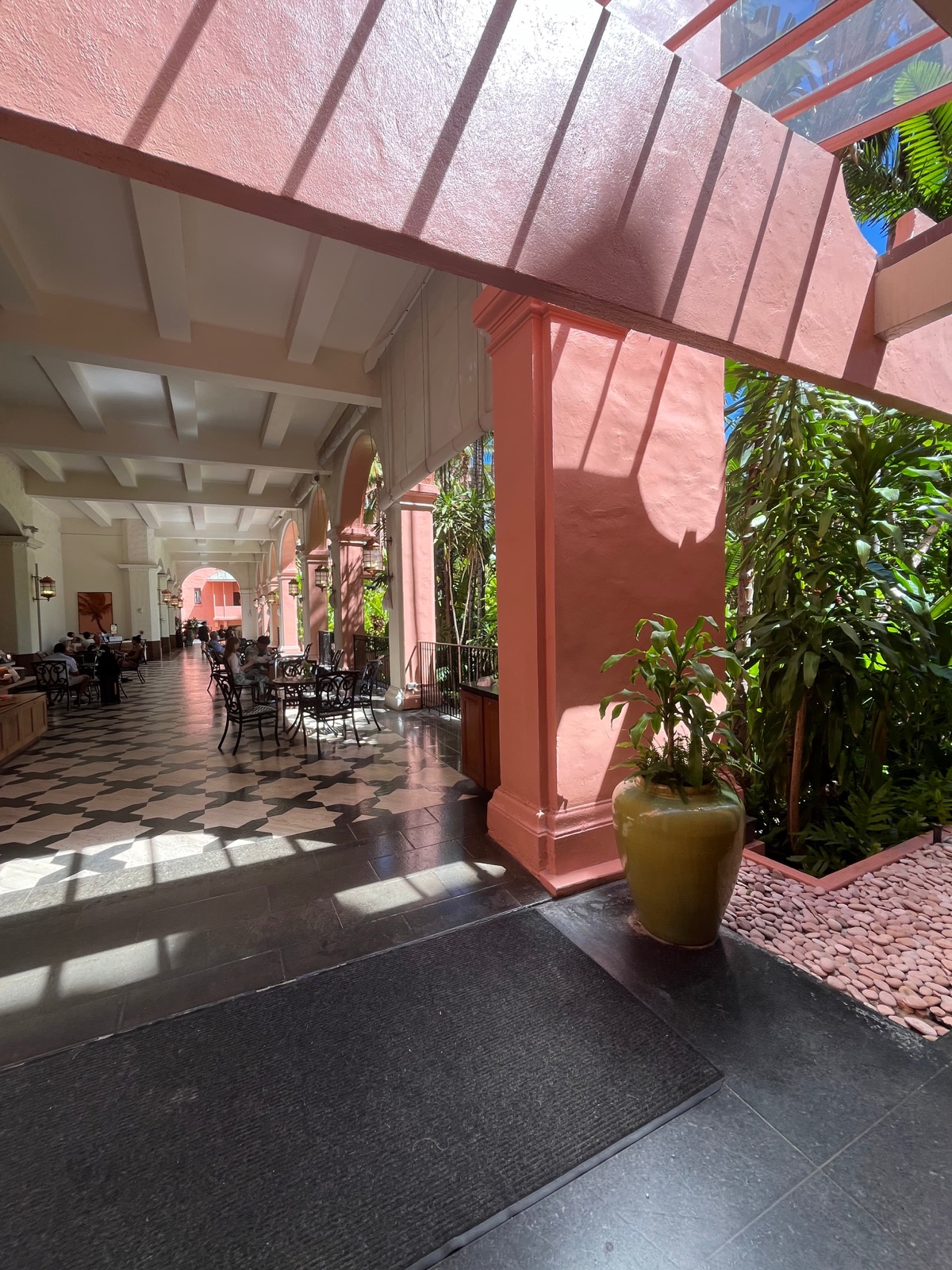
そして何より目を引くのが、あのピンク色です。
青い海、青い空、深い緑、白い砂。その景色の中に、周囲へ溶け込もうとするような色ではなく、鮮やかなピンクの巨大な建物が立っています。
この色の由来には、いくつかの話が残されています。一説によれば、マトソン社のウィリアム・ロスの友人夫妻がヨーロッパ旅行でリスボンを訪れ、そこで目にしたピンクの家と青い雨戸に魅了され、帰国後に自宅をサーモンピンクと青緑色に塗り替えたことがきっかけだったといいます。それを見たロスが気に入り、建設中のロイヤル ハワイアンにも同じ色を使いたいと申し出た、という逸話です。
そう考えると、ホテルを象徴するピンクまで、海を越えてハワイへ流れ着いた色だったのかもしれません。
そして、もう一つ興味深いのが、そのピンクと周囲の景色との関係です。
ハワイの青い海や空、濃い緑の植物に対して、ロイヤル ハワイアンのピンクは景色へ溶け込むというより、強いコントラストを作ります。
実際にそこへ泊まってみて、自分が面白いと感じたのはまさにその部分でした。
普通に考えれば、美しい自然の中へ建物を置く時には、その土地の景色に馴染ませようと考えます。海があるなら青や白、植物が多いなら緑やアースカラー。周囲と調和する方向へ寄せる方が自然です。
ところがロイヤル ハワイアンは、少なくとも自分の目には、その逆を行っているように見えました。
青と緑に満ちたワイキキの景色へ、あえてピンクという異質な色が入る。不思議なことに、それによって景色が壊れるのではなく、むしろ青や緑まで以前より鮮明に見えてくる。
ピンクの建物だけが美しいのではなく、その異質なものが入ることで、周囲の海や植物まで含めた一つの景色として記憶に残る。
ここにも、AGSでレコードを掘りながら考えていたこととよく似た構造があるように思いました。
「合うものを組み合わせる」ことだけが、調和ではない。
むしろ、そこへ一見すると合わないもの、対極にあるものを一つ置くことで、それぞれの特徴が以前より強く見えることがある。
音楽でも、同じジャンルの中で似たものを重ねるだけでは生まれない面白さがあります。Soulにハワイが入る。ハワイアン・ミュージックにFunkが入る。Jazzに鳥の声や自然音が入る。
建築でも、ハワイの王族と深く結びついた土地に、スパニッシュとムーアの要素を取り込んだ建築が建ち、そこへ鮮烈なピンクが置かれる。
そう考えると、今回ハワイで惹かれた「混ざり方」は、レコードの中だけにあったわけではありませんでした。
異なるものを混ぜること。そして時には、最初から「合いそうなもの」を探すのではなく、あえて対極にあるものを置いてみること。その違和感が互いの個性を強調し、どちらか一方だけでは生まれなかった魅力へ変わる。
ロイヤル ハワイアンのピンクを眺めながら、その発想には強く共感するものがありました。
そして考えてみれば、それはホテルだけの話ではありません。
ハワイに実際に行ってみると、「島」という言葉への印象も少し変わりました。
四方を海に囲まれていると聞けば、どこか閉じた場所を想像します。
しかし音楽の歴史を見ていくと、むしろその逆でした。
海を越えて人や文化、楽器、音楽が流れ込み、それらが島の中で混ざり、やがてまた別の音となって海の向こうへ出ていく。
海は島を閉じる境界線であると同時に、文化を運ぶ道でもあったのだと思います。
そして、外からさまざまな文化が流れ込んだからといって、もともと存在していたものがすべて消えたわけでもありません。
今回、初めてハワイで本場のフラを見て、自分でも実際に体験してみました。
それまで自分の中には、どこか「女性が踊る南国のダンス」というイメージがありましたが、実際には女性だけではなく、男性も、若い人も年配の人も、それぞれの形でフラに関わっていることが意外であり、同時にとても印象的でした。
実際に触れてみると、単に音楽に合わせて身体を動かすというよりも、歌や言葉、身体の動きを通して土地や人、物語を伝える文化なのだという印象を強く受けました。
つまりハワイの人々にとってフラは単なる娯楽や観光向けの踊りではなく、音楽的であると同時に、土地や精神性とも結びついた、人々の生活に根付く文化なのだという感覚がありました。
そしてそれは、まるでフラが「神との対話」であるかのような神秘性さえ垣間見え、現代社会においては享受できる機会の少ない貴重な体験であったと感じました。
新しいものを受け入れることと、古いものを失うことは同じではありません。
残るものがあり、姿を変えるものがあり、外から来たものと混ざるものもある。その三つが同じ場所で同時に存在していることが、ハワイの音楽を面白くしているのだと思います。
Martin DennyやArthur Lymanたちが作ったExoticaも、その極端な例なのかもしれません。
ヴィブラフォンや打楽器、鳥の声や自然音、そしてさまざまな土地や文化への想像を組み合わせながら、現実には存在しない場所の音を作る。
古いようにも聞こえる素材を使いながら、誰も見たことのない世界を描く。
今回ハワイへ行く前、自分の中には「ハワイの音」という一つの輪郭がありました。
帰ってきた今、その輪郭は以前よりむしろ曖昧になっています。しかし、それがまた面白いとも思います。
ハワイアン・ミュージックだけではなく、SoulやFunk、Jazz、Exotica、AORなど、いくつもの音楽が同じ土地の中で重なっている。さらに建築に目を向ければ、ハワイの王族と結びついた土地にスパニッシュとムーアの要素を持つピンク色のホテルが立っている。
どれか一つだけを切り取って、それをハワイだと言い切ることの方が難しい。
いろいろなものが海を越えて流れ着き、それぞれの時代で別のものと混ざり、その中からこの場所にしかないものが生まれていく。
今回自分が聴いたのは、「ハワイアン・ミュージック」という一つのジャンルというよりも、その交差点だったのかもしれません。
そして今回自分が見たハワイもまた、一つの文化だけでできた島ではなく、いくつもの異なるものが交差しながら、時に調和し、時に違和感を残し、その積み重ねによって独自の魅力を生み出してきた場所だったように思います。
TAKE A BREAK Vol.11|CROSSCURRENTS
Before going to Hawaii, the picture that came to mind when I heard the words “Hawaiian music” was, looking back, a fairly limited one.
Ukulele, steel guitar, and hula. Of course, even after actually visiting Hawaii, these remained essential to any understanding of the islands’ music.
But as I dug through records and explored more deeply, I discovered a much wider range of sounds just beyond that familiar picture: Latin, Soul, Funk, Jazz, AOR, and Exotica. These genres exist all over the world, yet records made in Hawaii sound subtly different from any of their counterparts elsewhere.
Music arriving from outside was not simply copied. As it passed through the atmosphere, people, and culture of these islands, it gradually changed its shape.
What fascinated me most on this trip was the way those elements mixed.
Augie Colón – Colón
https://www.youtube.com/watch?v=Hklkd6OFxk4&themeRefresh=1
The first artist I would like to introduce is Augie Colón.
Born in Honolulu, he was a percussionist who played an important role in Martin Denny’s group. Colón was known not only for his percussion, but also for the birdlike calls that became a distinctive feature of Denny’s recordings. In 1959, he released the solo album Sophisticated Savage.
One of the tracks on that album is “Colón.”
Percussion, voices, and sounds resembling animal calls intersect, creating a landscape far removed from what people generally imagine as Hawaiian music.
Rather than faithfully depicting the real Hawaii, it conjures a tropical world that exists only in someone’s imagination. Though it is an old recording, it somehow sounds like music from the future.
Exotica has never been so much about reproducing one real place as it is about combining imaginings of different places and cultures to construct a world that does not exist in reality.
That may be why a recording made nearly seventy years ago has not entirely aged. Heard today, it instead possesses a strange newness.
Lemuria – Hunk of Heaven
https://www.youtube.com/watch?v=J48ctAIyoSw
Of all the record shops I visited in Hawaii, AGS made an especially strong impression on me.
Officially, it is the record shop operated by Aloha Got Soul, located in Mōʻiliʻili, Honolulu.
Aloha Got Soul began as a blog in 2010, initially uncovering Hawaii-made Jazz, Funk, Soul, and R&B from the 1970s and ’80s. It later developed into a record label, and in 2021 opened the physical AGS shop. Today, under the banner of “Hawaiian music from the past to the present,” it introduces music from across the islands, generations, and genres.
Looking through the racks, I found not only conventionally recognized Hawaiian music, but Soul, Funk, Jazz, Reggae, Ambient, Experimental, and Hip-Hop—all arranged around the shared axis of Hawaii as a place.
The music I was searching for on this trip felt closely aligned with the concept behind AGS.
One song that comes to mind as a symbol of that connection is Lemuria’s “Hunk of Heaven.”
It is Soul, Funk, and Rare Groove born in Hawaii in the late 1970s. Aloha Got Soul has long presented it as a defining example of Hawaiian rare groove.
It contains elements reminiscent of Soul and Funk from elsewhere, yet it is not simply the same. It feels urban, but there is space between the sounds; it carries heat, yet a breeze moves through it.
As I looked through the racks at AGS, I found myself contemplating something beyond the music itself.
When creating something compelling—something that captures people’s interest—perhaps the uniqueness and originality born from combining one thing with another can become the hook of the work itself.
What I felt even more strongly on this trip was that the most interesting pairing may be “mainstream × niche.”
Mainstream × mainstream is easy to understand and likely to reach a wide audience. But because both elements are already familiar, combining them often produces little change and makes originality difficult to achieve.
Niche × niche, on the other hand, can be highly original. Yet when that world becomes too deep and specialized, the entrance itself can be difficult to see for anyone who was not already interested.
Between the two lies “mainstream × niche.”
Something only slightly unfamiliar is mixed into something everyone knows. The entrance feels welcoming, but one step inside reveals a landscape you have never seen before.
A local Hawaiian sensibility enters the universal format of Soul. Jazz and Funk flow into Hawaiian music.
Such combinations seem more likely to spark a chemical reaction that goes beyond simple addition.
One reason digging for records at AGS was so enjoyable was that its racks were filled with these kinds of combinations.
And I came to feel that this idea matters not only in music, but also whenever we create something through PENTHOUSE GROOVE.
What we understand and what we do not yet understand. Familiarity and dissonance. The mainstream and the niche. At the boundary between them, a hook emerges that catches people’s attention.
It seems that records were not the only thing I brought home from this trip.
Country Comfort – Make It With You
https://www.youtube.com/watch?v=wnCv-MBWJEQ
Country Comfort’s “Make It With You” is another song whose meaning changed for me through this journey.
A cover of the David Gates composition, it appears on the 1975 album We Are The Children, which was recorded at Sounds of Hawaii.
My father previously played this song in PENTHOUSE GROOVE’s DJ stream “mellow of shore.”
https://www.youtube.com/watch?v=TlkoDq_GKnc
While researching Hawaiian music again for this trip, I encountered the song once more. When I mentioned it to my father, he told me that Yann Tomita had originally introduced it to him.
From Yann Tomita to my father, from my father to PENTHOUSE GROOVE, and now, after traveling to Hawaii, back to me once again.
Once I understood that path, “Make It With You” became a special song for me.
From now on, whenever I hear it, I imagine I will remember not only this trip to Hawaii, but also my father and the connection with Yann that he told me about.
This led me to think about the mysterious ways music circulates.
The recorded sound itself may remain unchanged, while the meaning of the song continues to change within the listener.
Who introduced it to you, where you heard it, who was with you, and how many years passed before you found your way back to it—as each of these memories accumulates, the same song gradually takes on another meaning.
Perhaps music passing from person to person is not simply the transfer of a recording. Perhaps the memories surrounding it are also inherited, little by little.
The “Mixing” Found in the Pink Palace
On this trip, I stayed at The Royal Hawaiian in Waikiki.
Known as the “Pink Palace of the Pacific,” the hotel opened on February 1, 1927. Built to accommodate travelers arriving in Hawaii aboard Matson’s luxury liners, the six-story, 400-room hotel cost four million dollars and took eighteen months to complete.
Looking further back, the site itself holds another layer of history. Before Waikiki was developed as a tourist destination, the surrounding area was an important place of residence and retreat for Hawaiian royalty. Kamehameha I had a residence on the site where the hotel now stands, while Kaʻahumanu is said to have had a summer palace near what is now the Coconut Grove.
Yet the hotel built there in the 1920s was not simply a monumental version of traditional Hawaiian architecture.
It was designed by the New York architectural firm Warren & Wetmore. The building incorporated the Spanish-Moorish style fashionable at the time and is said to have been influenced by the films of movie star Rudolph Valentino. It has also been described as architecture shaped by both Spanish Revival and Moorish styles.
In other words, although it would become one of Hawaii’s most iconic hotels, its architecture was from the very beginning a blend of images drawn from different places and cultures.
More than anything, what catches the eye is that pink.
Blue ocean, blue sky, deep green foliage, white sand. Amid this scenery stands an enormous, vivid pink building in a color that makes no attempt to blend into its surroundings.
Several stories remain about the origin of the color. According to one, a couple who were friends of Matson executive William Roth visited Lisbon while traveling through Europe. Captivated by the pink houses and blue shutters they saw there, they returned home and repainted their own house salmon pink with blue-green trim. Roth admired the result and asked for the same colors to be used on The Royal Hawaiian, then under construction.
Seen in that light, even the pink that came to symbolize the hotel may have been a color that crossed the ocean and washed ashore in Hawaii.
Another fascinating aspect is the relationship between that pink and the surrounding landscape.
Against Hawaii’s blue sea and sky and its deep green vegetation, the pink of The Royal Hawaiian creates a powerful contrast rather than melting into the scenery.
Staying there, I found that contrast to be the most interesting part.
Ordinarily, when placing a building in beautiful natural surroundings, we might try to make it harmonize with the local landscape: blues and whites beside the sea, greens and earth tones amid abundant vegetation. It seems natural to move toward colors that blend with the setting.
The Royal Hawaiian, however, appeared to me to do the opposite.
Into a Waikiki landscape filled with blue and green comes the deliberately alien presence of pink. Strangely, it does not spoil the view. Instead, even the blues and greens seem more vivid than before.
It is not only the pink building that is beautiful. By introducing something so distinct, the whole scene—including the surrounding ocean and plants—becomes memorable as a single image.
I felt there was a structure here very similar to what I had been thinking about while digging through records at AGS.
Harmony is not created only by “combining things that naturally go together.”
Sometimes placing one seemingly incompatible or opposing element beside another makes the qualities of each stand out more strongly than before.
Music, too, offers forms of fascination that cannot arise merely by layering similar things within the same genre. Hawaii enters Soul. Funk enters Hawaiian music. Birdcalls and natural sounds enter Jazz.
In architecture, a building incorporating Spanish and Moorish elements rises on land deeply connected to Hawaiian royalty, and an intense pink is placed within it all.
Seen this way, the forms of “mixing” that drew me to Hawaii on this trip were not confined to its records.
Mixing different things—and, at times, resisting the impulse to seek elements that seem compatible from the start, instead deliberately placing opposites together. The resulting dissonance can heighten the individuality of each and transform it into an appeal that neither could have produced alone.
Looking at the pink of The Royal Hawaiian, I felt a deep affinity with that idea.
And when I thought about it, I realized this was not only a story about a hotel.
Actually visiting Hawaii also changed my impression of the word “island.”
When we hear of a place surrounded by ocean on every side, we may imagine somewhere closed off.
Yet when I looked at its musical history, I found the opposite.
People, cultures, instruments, and music crossed the sea and flowed into the islands. There they mixed, eventually becoming different sounds that traveled back out across the ocean.
The sea was both the boundary enclosing an island and a road that carried culture.
And the arrival of many cultures from outside did not mean that everything already there disappeared.
On this trip, I saw hula in Hawaii for the first time and had the opportunity to experience it myself.
Until then, I had vaguely imagined it as “a tropical dance performed by women.” I was surprised, and deeply impressed, to discover that not only women, but men, young people, and elders all participate in hula in their own ways.
Experiencing it firsthand, I strongly felt that hula is not simply a matter of moving the body to music. It is a culture that communicates places, people, and stories through song, language, and movement.
In other words, for the people of Hawaii, hula is neither mere entertainment nor a dance for tourists. It is musical, but it is also bound to the land and to spirituality—a culture rooted in people’s lives.
I even glimpsed a sense of mystery, as though hula were a “dialogue with the divine.” It felt like a precious experience of a kind rarely available in modern society.
Accepting the new is not the same as losing the old.
Some things remain, some change their form, and some mix with what arrives from outside. The simultaneous presence of all three in the same place is, I think, what makes Hawaii’s music so fascinating.
The Exotica created by Martin Denny, Arthur Lyman, and others may be an extreme example.
Vibraphone and percussion, birdcalls and sounds of nature, and imaginings of many different places and cultures are combined to create the sound of a place that does not exist in reality.
Using materials that may sound old, they depict a world no one has ever seen.
Before this trip, I held a single outline in my mind of what “the sound of Hawaii” was.
Now that I have returned, that outline is blurrier than before. Yet I find that ambiguity fascinating.
Not only Hawaiian music, but Soul, Funk, Jazz, Exotica, AOR, and many other forms overlap within the same place. And when we turn to architecture, a pink hotel with Spanish and Moorish elements stands on land connected to Hawaiian royalty.
It is harder to isolate any one of these things and declare that alone to be Hawaii.
All kinds of things cross the ocean and wash ashore, mixing with something different in each era. From those encounters emerge things that could only have been created in this place.
Perhaps what I heard on this trip was not a single genre called “Hawaiian music,” but the crossroads itself.
And the Hawaii I saw on this trip was likewise not an island made from a single culture, but a place where many different things have intersected—sometimes harmonizing, sometimes leaving a sense of dissonance—and where the accumulation of those encounters has created its distinctive appeal.
note 別編集版 / Read on note
note には別編集版も公開中です。あわせてお楽しみください。
A separately edited version is also available on note. We hope you enjoy it.
vol.10 太陽は2度昇る
Photos


TAKE A BREAK Vol.10|太陽は2度昇る
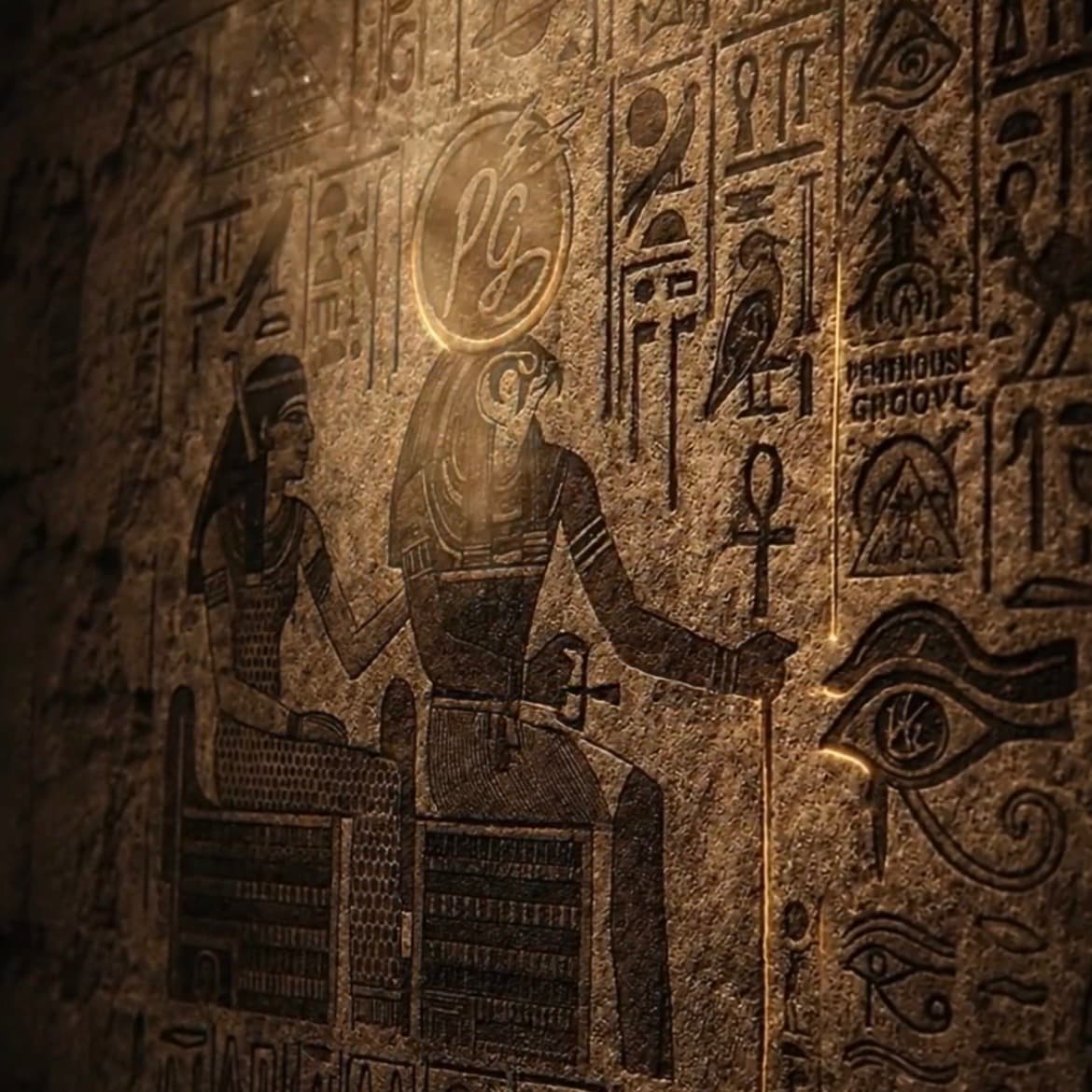
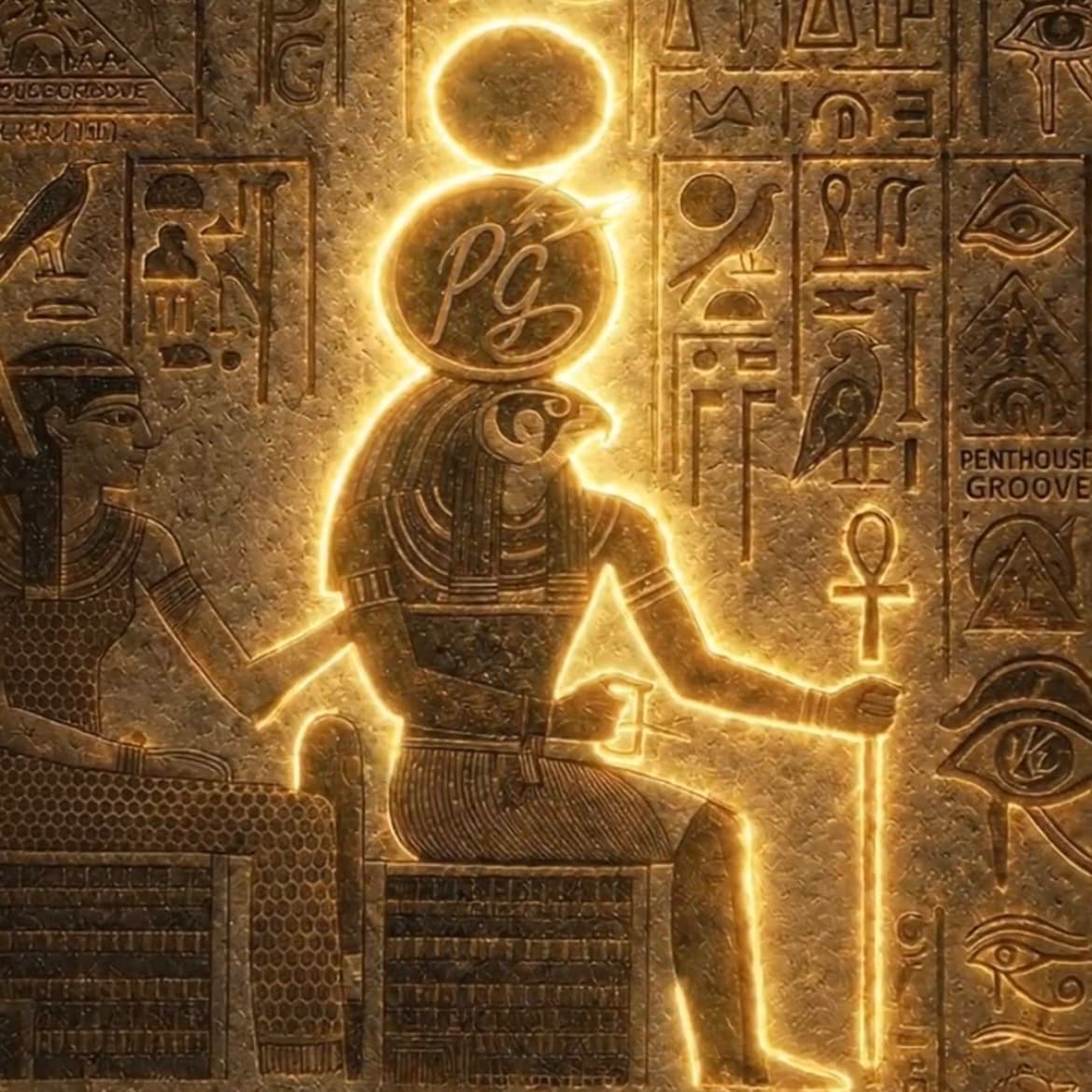
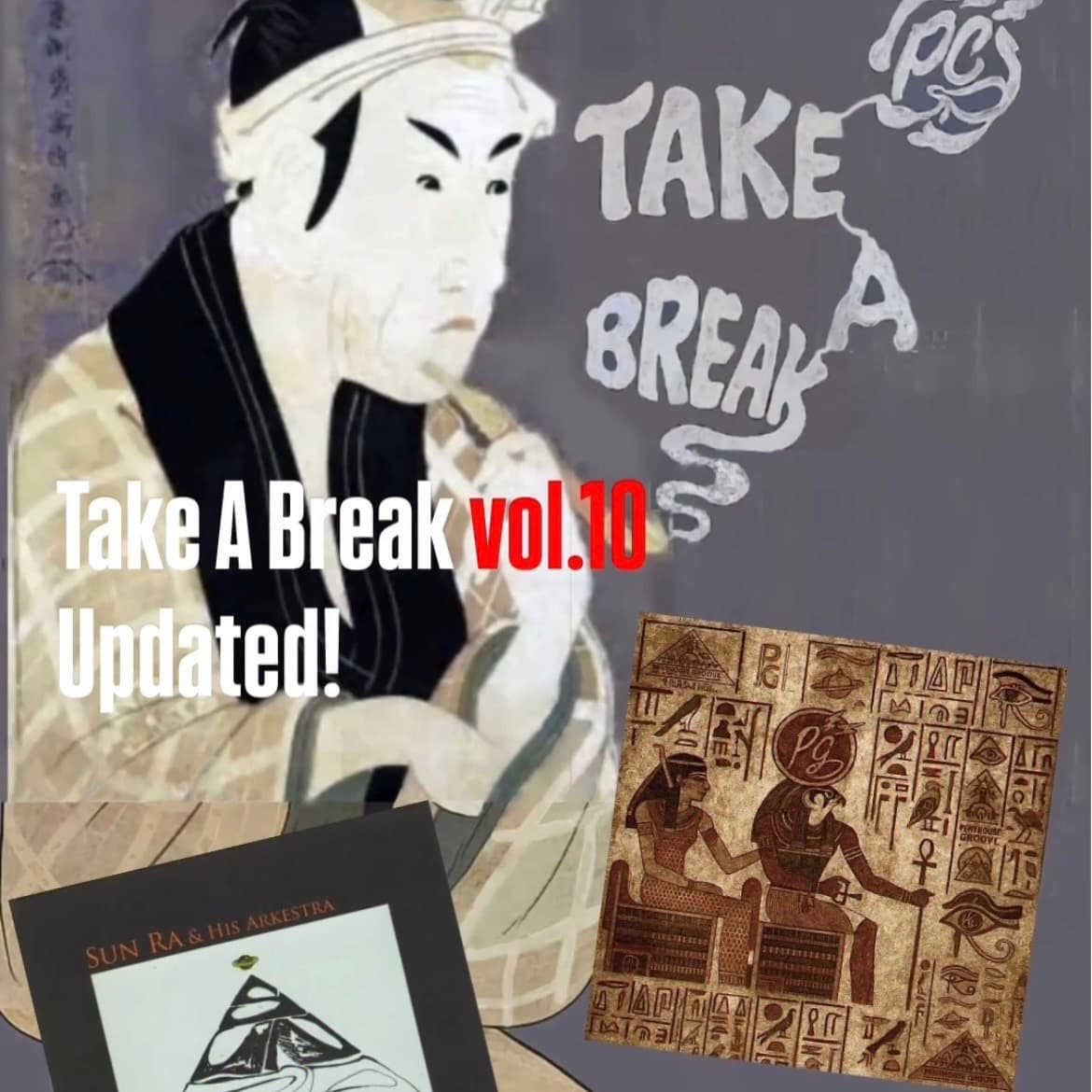
Take a break vol.10では、エジプトの神秘にフォーカスしてみようと思います。
エジプト神話にはさまざまな神が登場しますが、その中でも太陽神Raには特に惹かれる部分があります。
なぜなら、我々の音楽に大きな影響を与えてきた存在の一人に、古代エジプトの太陽神Raにその名を取り、エジプト的なモチーフと宇宙思想を独自の音楽世界へと結びつけたSun Raがいるからです。
PENTHOUSE GROOVE a.k.a Father & Son Daという活動名も、Sun Raから一部着想を得ています。
私も父も、これまでSun Raからさまざまなインスピレーションを受けてきました。
その始まりの一つが、父が昔ロンドンのHonest Jon’sというレコード店でSun Raの『Lanquidity』を入手したことでした。
そこからやがて、Sun Raにも通じる宇宙的な音楽世界を独自に追究してきたヤン富田さんと父が仕事で関わるようになります。
こうしたさまざまな出会いを経て、父の音楽史の一つの軸として、Sun Raを起点に広がっていくような宇宙的な音楽世界が形作られていったように思います。
そして直近では、私と父でPENTHOUSE GROOVE a.k.a Father & Son Daをスタートし、父から教わったさまざまな楽曲を使って私もDJをするようになりました。
『Lanquidity』をはじめとするSun Raの楽曲はもちろん、ヤン富田さんとの仕事を通して父が出会った宇宙的なサウンドを持つ作品など、それまで私が知らなかったさまざまな音楽を教わりました。
例えば、まだYouTubeでDJ配信を始めて間もなかった頃の【PENTHOUSE GROOVE DJ Live Streaming vol.2】では、そうした楽曲を初めて私自身のDJで使用しました。
https://m.youtube.com/watch?v=grgFlhoK7A8&ra=m
Sun Raの作品の中では比較的軽やかで爽やかに響く「Song No.1」と、父とヤン富田さんが仕事で使用した、宇宙的な浮遊感を持つ楽曲を組み合わせたシーンは、この回のハイライトの一つです。
ちなみに「Song No.1」は、1974年に録音された『The Antique Blacks』に収録されている楽曲で、Sun Raの作品としては比較的軽快で親しみやすい表情を持っています。
Sun Raの世界を少し違う角度から覗き込んだような、爽やかさと宇宙的な浮遊感が混ざり合い、不思議な多幸感が生まれていく。
そんなイメージで父と一緒に選曲を作ることができたのは、今ではとてもいい思い出です。
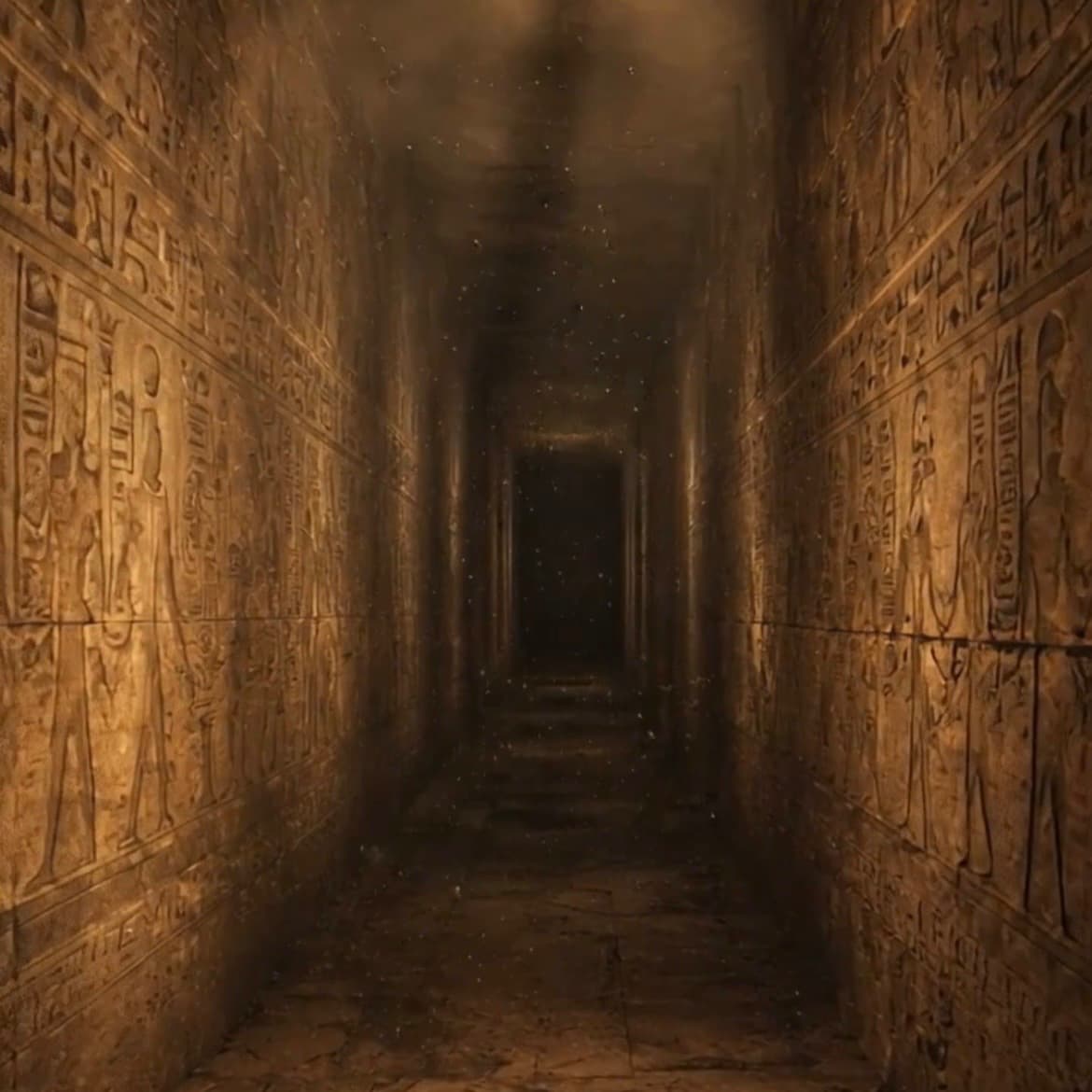
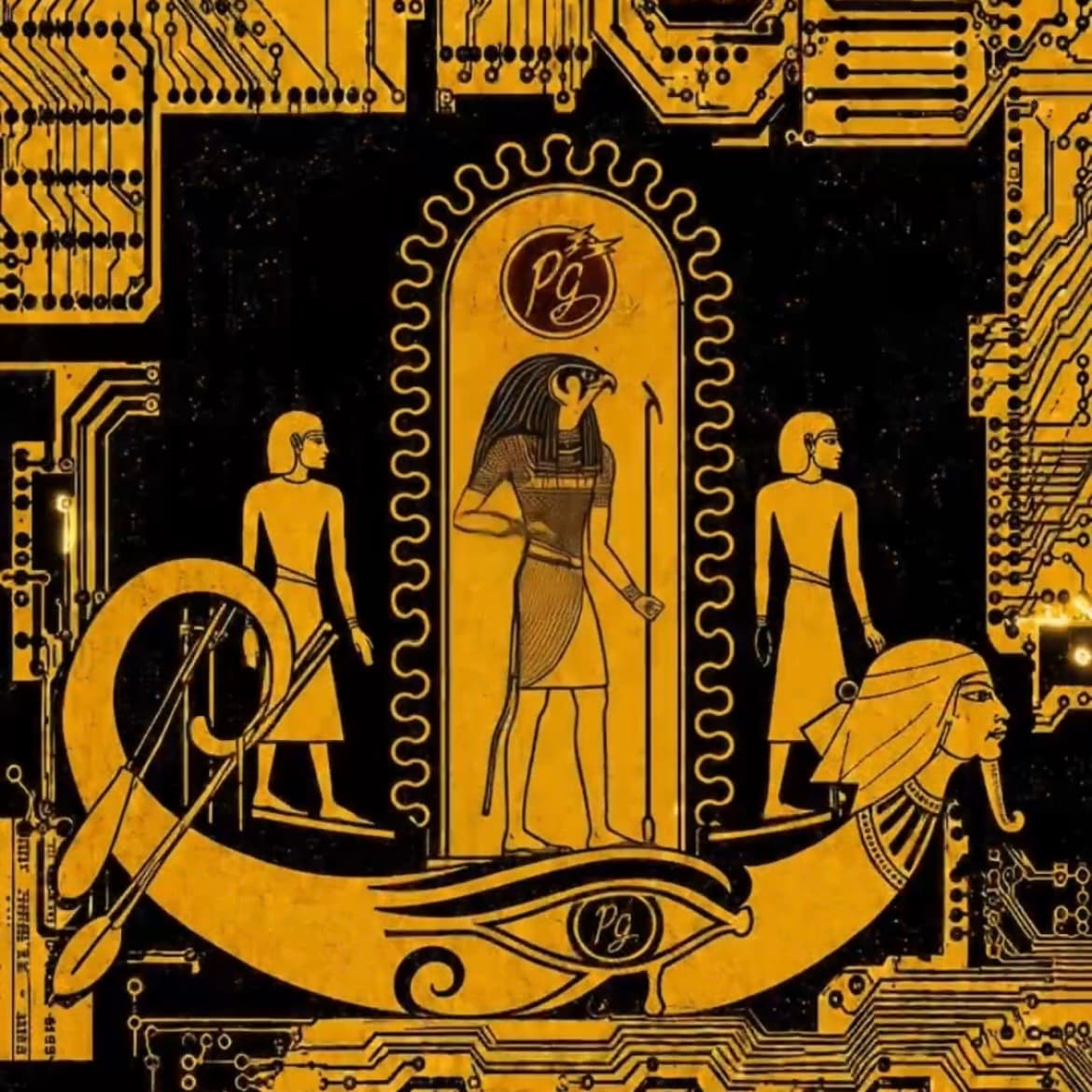
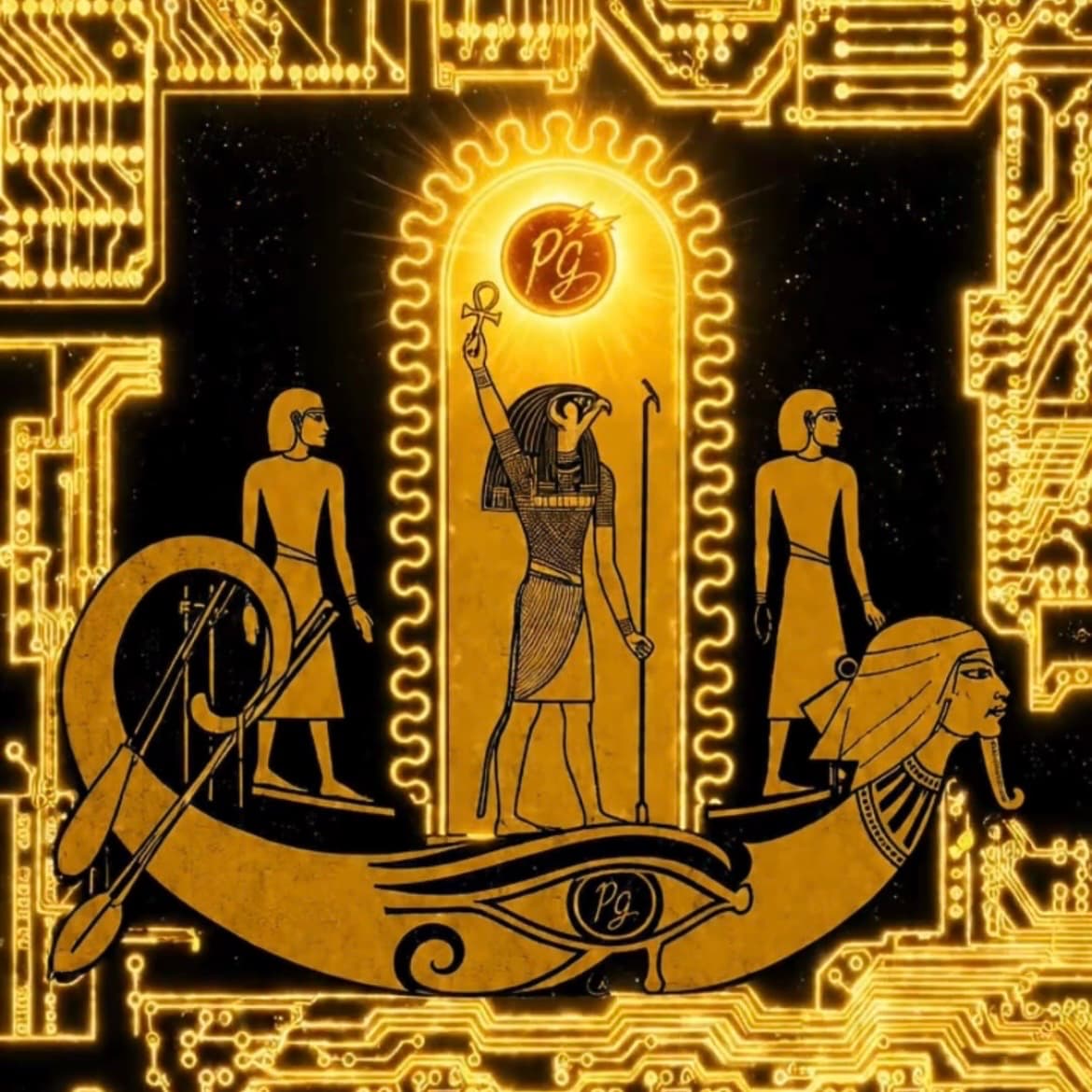
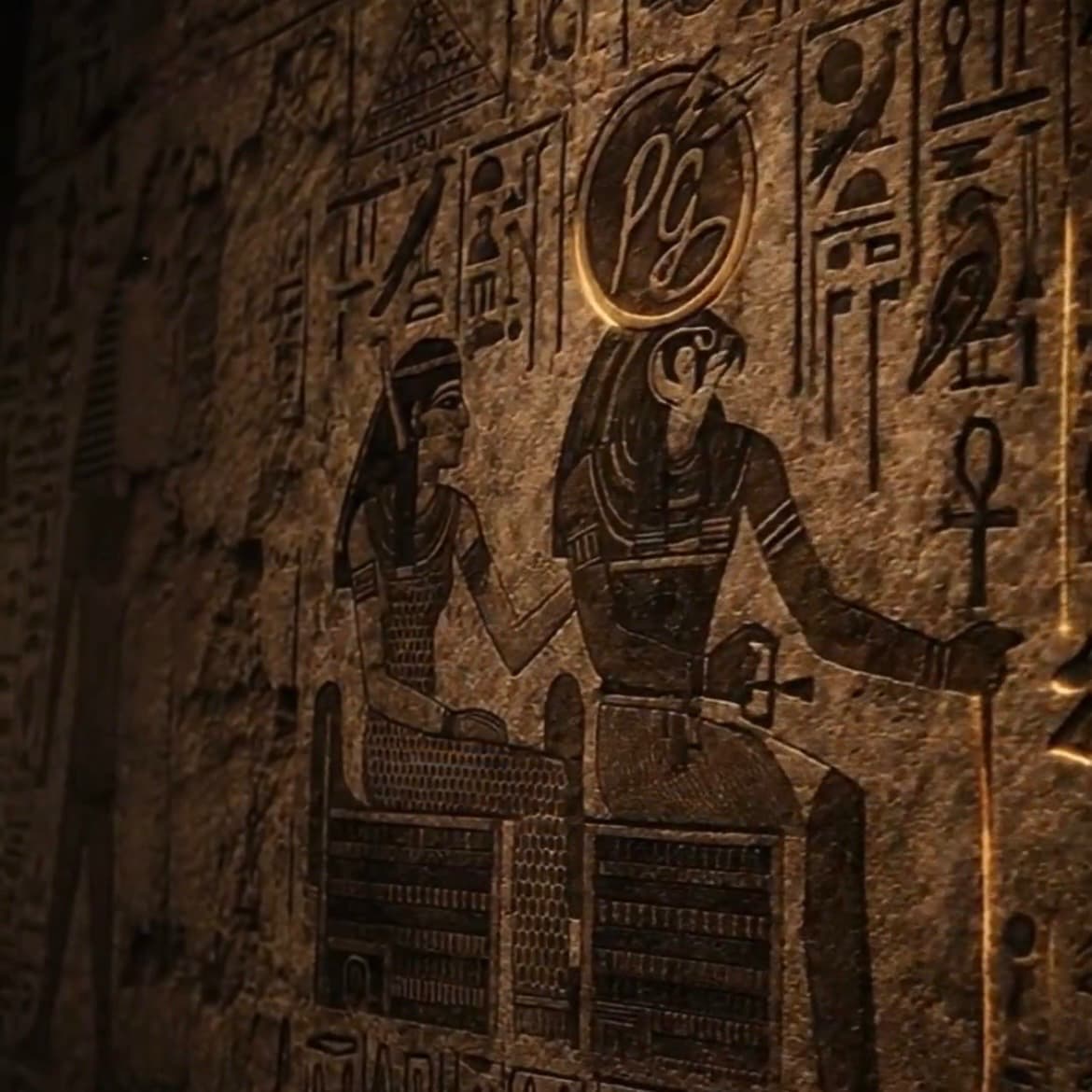
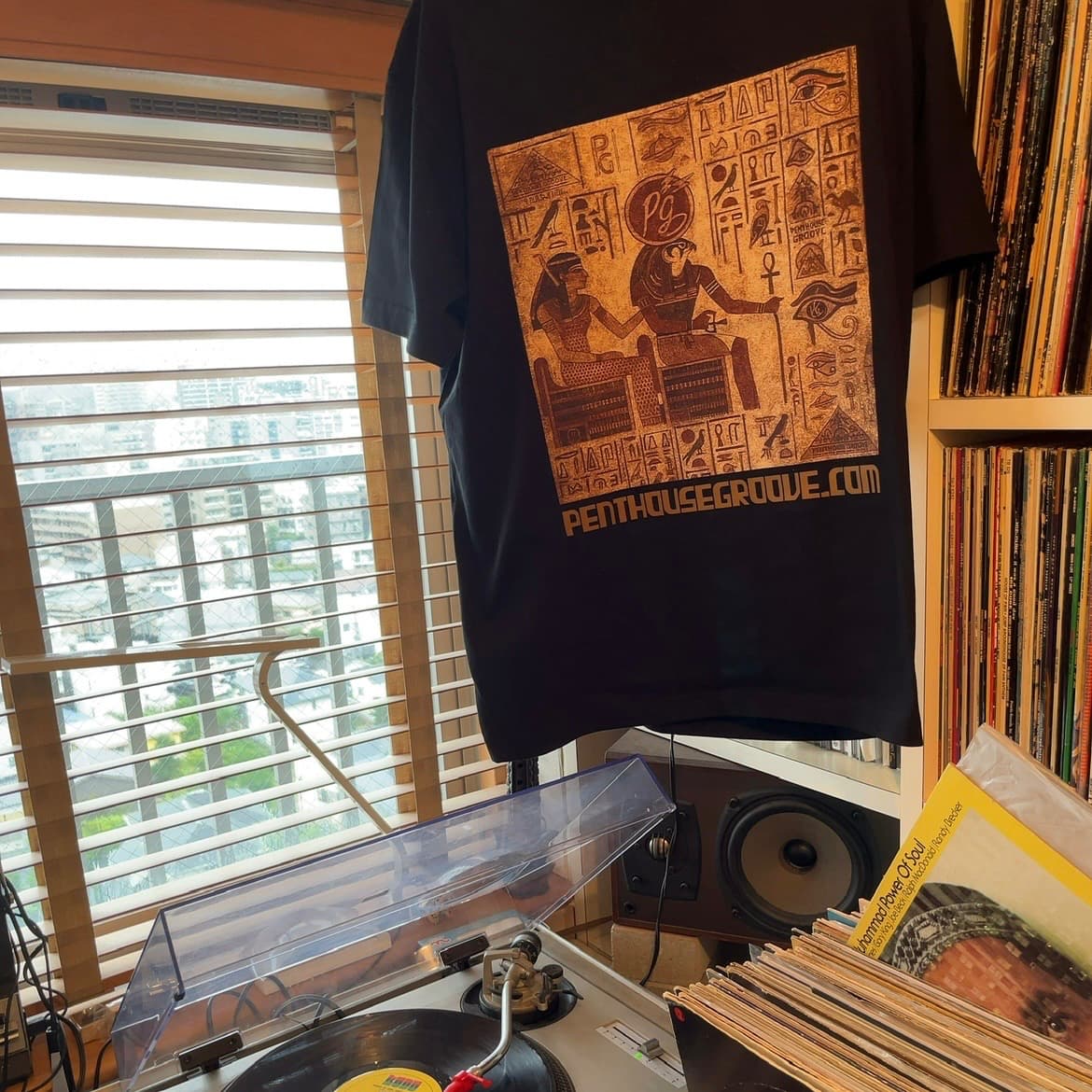
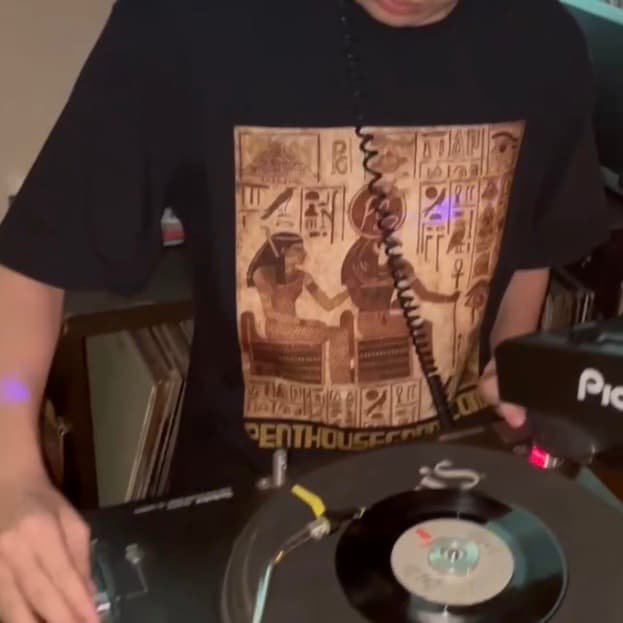
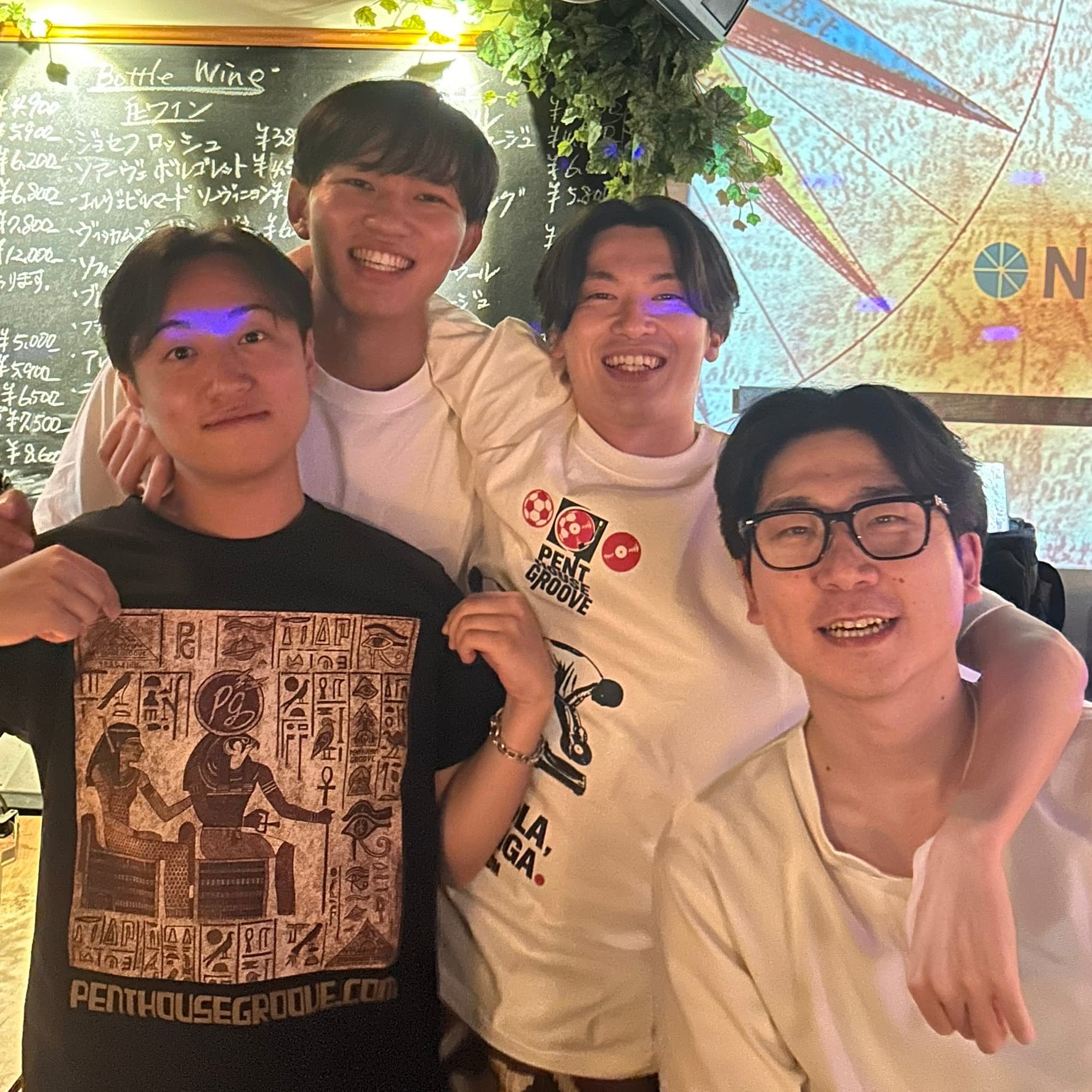
2025年の夏に開催した【PENTHOUSE GROOVE 2025 SUMMER SPECIAL GIG】では、Sun Raだけでなくエジプトのヒエログリフからも着想を得て、我々がこれまで紡いできた世界観の一つをプロダクトへと落とし込みました。
https://pnthsgroove.base.shop/items/114699092
2026/08/09に開催した先日のイベントでは、このTシャツを実際に着て遊びに来てくださった方もいました。
自分たちが音楽から受け取ったものを形にし、それをまた別の誰かが受け取ってくれている。
その光景を見ることができたことを、とても嬉しく感じました。
そして2026/08/11に行ったDJ配信では、もう一つ印象深い「エジプトとの接点」が生まれました。
https://www.youtube.com/live/WF1mGuEBlqI
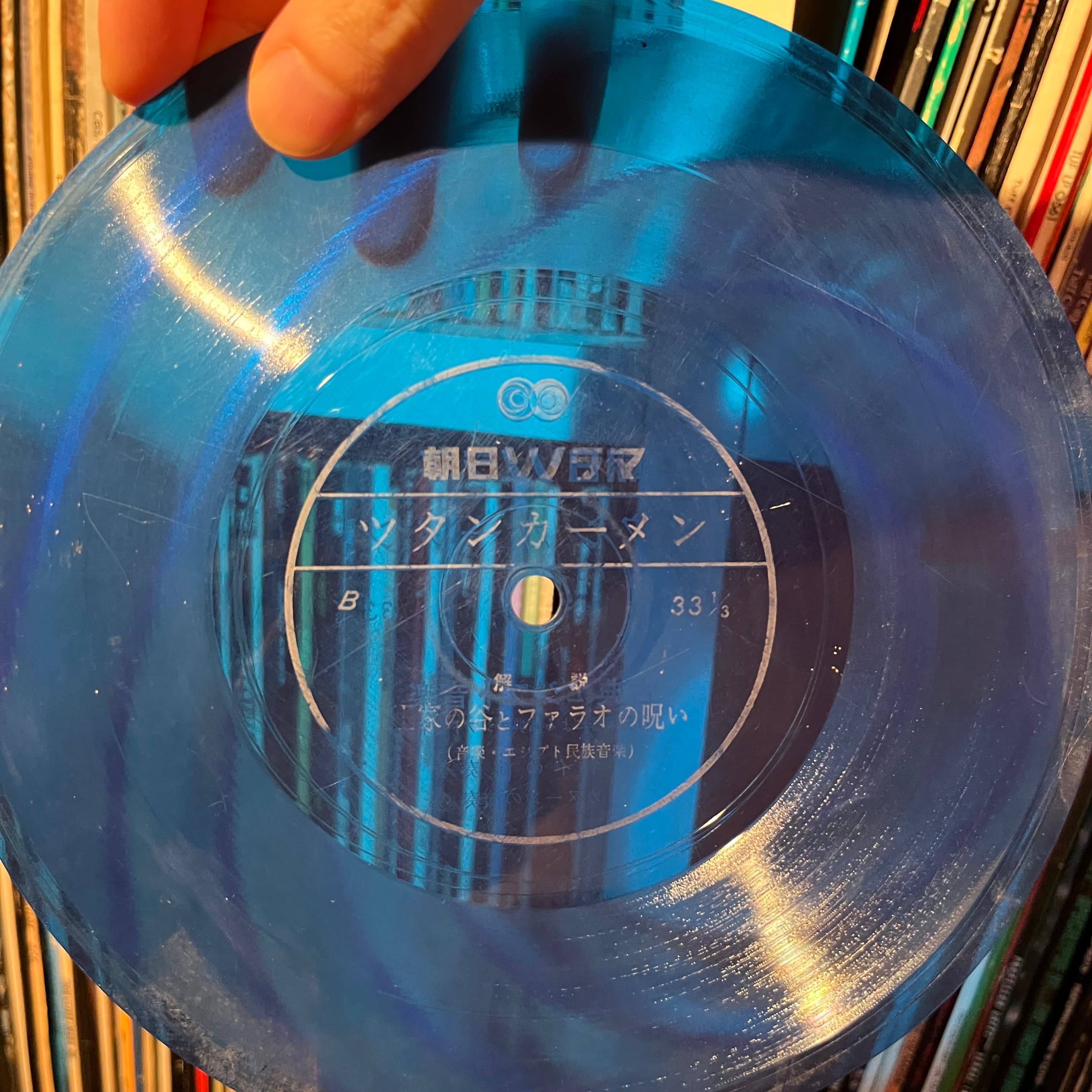
今回の配信では、ペルシャ音楽の響きを持つLloyd Millerの「GOL-E GANDOM」と、「王家の谷とファラオの呪い」というナレーション音源を重ねました。
「GOL-E GANDOM」は厳密にはエジプト音楽そのものではありません。Lloyd Millerが深く研究していたペルシャ音楽とジャズを接続した作品です。
しかし、そのサイケデリックでモーダルな響きに、王家の谷やファラオの呪いについて淡々と語られるナレーションを重ねることで、実在するどこか一つの地域の音楽を再現するのではなく、我々の頭の中にある「妖しく、神秘的な古代世界」を音で描くことができたように思います。
ちなみに、このナレーションが収録されたソノシートは、父が子供の頃、当時開催されていたエジプト展へ足を運んだ際に購入したものです。
当時は単なる記念として買ったものだったのかもしれません。
それが何十年もの時を経て、息子である私が父と一緒に行うDJ配信の中で、まったく別の音楽と組み合わされ、再び鳴ることになりました。
そう考えると、この出来事にはどこか「必然性のある偶然」を感じます。
ここで、太陽神Raについて調べていて興味深く感じた話があります。
古代エジプトの神話において、Raは太陽の船に乗って天空を進み、日が沈むと冥界へ入り、混沌を象徴する存在と対峙しながら夜を進み、やがて再び朝の太陽として現れると考えられていました。
一度姿を消したものが、長い旅を経て再び現れる。
もちろん偶然ではありますが、父が子供の頃に手に入れた一枚のソノシートが長い時間を経て再び音を鳴らし、その隣で息子である私がDJをしているという出来事を考えると、このRaの物語とどこか重なるものを感じずにはいられません。
音楽もまた、過去に生まれたものが別の時代、別の場所、別の人間によって発見され、新しい意味を持って再び鳴り始めるものなのかもしれません。
さらに、エジプト神話には音楽そのものと深く結びついた存在もあります。
女神ハトホルは音楽や喜びと深く結びつき、その祭祀ではシストラムと呼ばれる振って音を鳴らす楽器が用いられました。
エジプトというと、ピラミッド、ミイラ、死者の世界、呪いといった妖しいイメージを思い浮かべがちですが、その一方には音楽や喜びも存在しています。
考えてみれば、Sun Raの音楽にも、混沌とした宇宙的な音響の隣に、驚くほど軽やかでユーモラスな瞬間や、多幸感のある音楽が同居しています。
そうした両面性にも、我々がエジプトやSun Raの世界に惹かれる理由があるのかもしれません。
上記から分かる通り、我々はこれまで各所で、エジプトが持つ神秘性からさまざまなインスピレーションを受けてきました。
まだ実際にエジプトを訪れたことはありませんが、4500年以上を経た現在も建造工程の細部にさまざまな議論を残すピラミッドや、以前イベントのプロダクトで着想を得たヒエログリフなどを、いつか自分の目で見てみたいと強く感じています。
そして、その旅からまた新しい音楽へとつながる何かを持ち帰ることができれば面白いなと思います。
これまでの出会いも、これからの出会いもまた、「必然性のある偶然」を呼び起こす何かにつながっているのかもしれません。
長くなりましたが、我々がエジプトからどのようなインスピレーションを受けているのか気になった方は、ぜひPENTHOUSE GROOVEのDJ配信やイベントをチェックしてみてください。
父と私が紡いできたさまざまな音楽が、皆様にとって新しい出会いや発見につながれば幸いです。
TAKE A BREAK Vol.10|The Sun Rises Twice
In Take A Break Vol.10, I’d like to focus on the mysteries of Egypt.
Many gods appear in Egyptian mythology, but I feel particularly drawn to Ra, the sun god.
One reason is Sun Ra, a figure who has had a profound influence on our music. Taking his name from the ancient Egyptian sun god Ra, he connected Egyptian motifs and cosmic philosophy with a musical universe entirely his own.
Our name, PENTHOUSE GROOVE a.k.a Father & Son Da, was also inspired in part by Sun Ra.
Both my father and I have received a great deal of inspiration from Sun Ra over the years.
One starting point was when my father found a copy of Sun Ra’s Lanquidity at Honest Jon’s, a record shop in London, many years ago.
In time, my father came to work with Yann Tomita, who has pursued his own distinctive cosmic musical world—one that also resonates with Sun Ra.
Through these many encounters, I feel that a cosmic musical universe, expanding outward from Sun Ra, gradually took shape as one of the central threads in my father’s musical history.
More recently, my father and I started PENTHOUSE GROOVE a.k.a Father & Son Da, and I began DJing with the many tracks he had introduced to me.
Alongside Sun Ra’s music, including Lanquidity, he taught me about many works I had never known before, among them records with cosmic sounds that he encountered through his work with Yann Tomita.
For example, in 【PENTHOUSE GROOVE DJ Live Streaming vol.2】, made not long after we began streaming DJ sets on YouTube, I used some of those tracks in one of my own sets for the first time.
https://m.youtube.com/watch?v=grgFlhoK7A8&ra=m
One of the highlights is a passage that combines “Song No.1,” which sounds relatively light and refreshing among Sun Ra’s works, with a track of cosmic weightlessness that my father and Yann Tomita had used in their work.
“Song No.1,” incidentally, appears on The Antique Blacks, recorded in 1974, and has a comparatively buoyant and approachable character for a Sun Ra composition.
It feels like looking into Sun Ra’s world from a slightly different angle: freshness mingles with cosmic suspension, giving rise to a strange sense of euphoria.
Being able to build a selection around that image together with my father is now a very fond memory.
At 【PENTHOUSE GROOVE 2025 SUMMER SPECIAL GIG】, held in the summer of 2025, we drew inspiration not only from Sun Ra but also from Egyptian hieroglyphs, translating one of the worlds we had developed over time into a physical product.
https://pnthsgroove.base.shop/items/114699092
At our recent event on August 9, 2026, someone even came wearing that T-shirt.
We had given form to something we received from music, and someone else, in turn, had received it from us.
Seeing that made me truly happy.
Then, during our DJ stream on August 11, 2026, another memorable “point of contact with Egypt” emerged.
https://www.youtube.com/live/WF1mGuEBlqI
In this stream, we layered Lloyd Miller’s “GOL-E GANDOM,” with its Persian musical resonance, together with a spoken-word recording titled “The Valley of the Kings and the Pharaoh’s Curse.”
Strictly speaking, “GOL-E GANDOM” is not Egyptian music. It connects jazz with the Persian music that Lloyd Miller studied so deeply.
Yet by placing a calm narration about the Valley of the Kings and the pharaoh’s curse over its psychedelic, modal sound, I feel we managed not to reproduce the music of any single real place, but to paint in sound the “uncanny, mysterious ancient world” that exists in our imagination.
The flexi disc containing this narration was bought by my father when, as a child, he visited an Egyptian exhibition being held at the time.
Perhaps he bought it simply as a souvenir.
Decades later, it sounded again in a DJ stream performed by my father and me, his son, now combined with entirely different music.
Seen in that light, the event feels like a kind of “chance with inevitability.”
While researching the sun god Ra, I came across a story that especially intrigued me.
In ancient Egyptian mythology, Ra was believed to travel across the sky in a solar barque. When the sun set, he entered the underworld and journeyed through the night while confronting a being that embodied chaos, before finally appearing once again as the morning sun.
Something disappears, then returns after a long journey.
It is of course a coincidence, yet when I think of a flexi disc my father acquired as a child sounding again after so many years, with me DJing beside him, I cannot help but feel an echo of Ra’s story.
Perhaps music works in much the same way: something born in the past is discovered in another era, another place, by another person, and begins to sound again with new meaning.
Egyptian mythology also includes a figure deeply connected with music itself.
The goddess Hathor was closely associated with music and joy, and her worship involved the sistrum, an instrument sounded by shaking it.
When we think of Egypt, we tend to imagine pyramids, mummies, the realm of the dead, and curses. Yet alongside those uncanny images, there is also music and joy.
Come to think of it, Sun Ra’s music likewise places astonishingly light, humorous moments and euphoric music beside chaotic, cosmic soundscapes.
Perhaps this duality is another reason we are drawn to the worlds of Egypt and Sun Ra.
As all of this suggests, we have long found inspiration in the mysteries of Egypt in many different parts of our work.
Although I have never actually visited Egypt, I feel a strong desire to see with my own eyes its pyramids—whose construction still invites debate over many details more than 4,500 years later—and the hieroglyphs that once inspired one of our event products.
And it would be fascinating to bring something home from that journey that might lead us toward new music once again.
Perhaps the encounters we have already had, as well as those still to come, are connected to something that will bring forth another “chance with inevitability.”
This has become a long reflection, but if you are curious about the inspiration we draw from Egypt, please check out PENTHOUSE GROOVE’s DJ streams and events.
I hope the many strands of music my father and I have woven together will lead you to new encounters and discoveries of your own.
note 別編集版 / Read on note
note には別編集版も公開中です。あわせてお楽しみください。
A separately edited version is also available on note. We hope you enjoy it.
vol.9 MAS QUE BOLA, MAS QUE GINGA
Photos



TAKE A BREAK Vol.9|MAS QUE BOLA, MAS QUE GINGA
Take A Break vol.9では、最近夢中になっているサッカー観戦から考えたことについて書いてみようと思います。
今年のワールドカップは、メッシやクリスティアーノ・ロナウド、ネイマールなどにとって最後の大会になるかもしれないとのことで、久々に観てみようかなと思ったのが始まりでした。
最初は純粋に試合を楽しむつもりだったのですが、観れば観るほど、サッカーと音楽には驚くほど多くの共通点があることに気付かされました。
まず一点目の共通点は、どちらにも「理論」がある点です。
サッカーには戦術があり、音楽には音楽理論があります。
サッカーについても音楽についても、これらが存在していることによって、そのコンテンツが人々を楽しませるものになっていることは紛れもない事実だと思います。
しかし、本当に人を熱狂させる瞬間というのは、それらを超えた“偶発性”によって生まれているように思います。
そして、この「偶発性」こそ、サッカーと音楽に見られる最も注目すべき共通点ではないかと考えています。
誰も予想できなかったパス。
一瞬のひらめきから生まれるドリブル。
ライブでしか起こらないセッション。
ほんの少しだけ前後したリズム。
そういった「狙って作れない瞬間」が人々を熱狂させ、感動させるのではないでしょうか。
AIや分析技術が発達した現代では、戦術も音楽制作もどんどん理論化されています。
それでも最後に人の心を動かすのは、人間だけが持つ刹那的なグルーヴなのだと感じています。
だからこそ、何度観ても、何度聴いても飽きない。
再現できないからこそ価値があるということを、両者は思い起こさせてくれるように感じます。
そんなことを考えていると、改めてブラジルという国の面白さに気付きました。
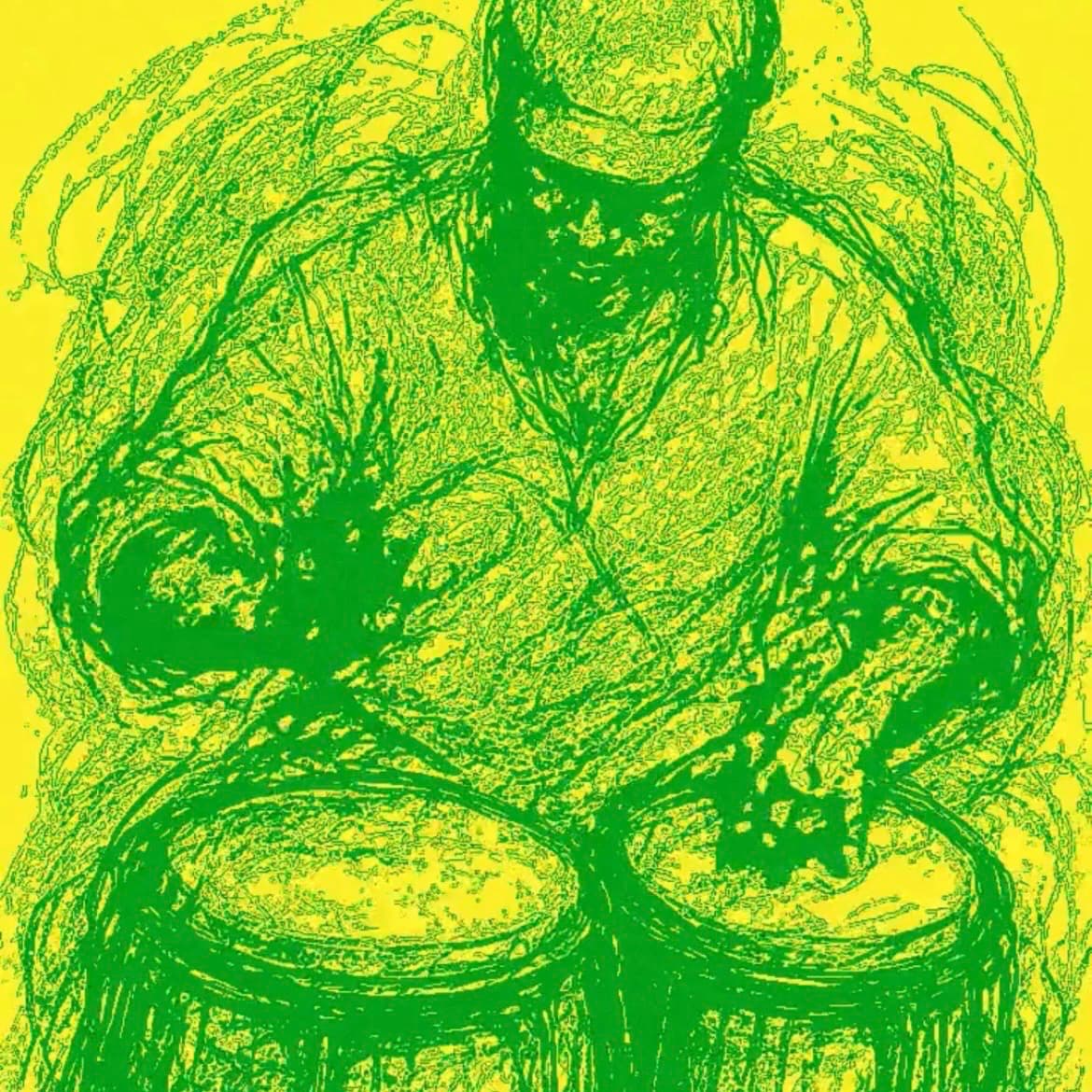
ブラジルには「GINGA(ジンガ)」という言葉があります。
身体を揺らす独特のリズム。
その起源は遊び心にあり、一種の「余白」とも表現できます。
技術だけでは説明できない、人間らしいグルーヴ。
このGINGAという感覚は、ブラジル音楽にもブラジルサッカーにも共通して流れていると思います。
だからこそ私はブラジルに強い魅力を感じるのだと、今回のW杯を契機として気付くことができました。
そして次回のPENTHOUSE GROOVEでは、このGINGAをテーマに選曲を組み立てました。
サッカーでも音楽でも、人間だからこそ生まれる偶発性。
その一瞬の輝きを、音楽という形で表現したいと思っています。
サッカーは、ただボールをゴールへと運ぶ競技ではない。
GINGAとは、単なる身体の揺れではない。
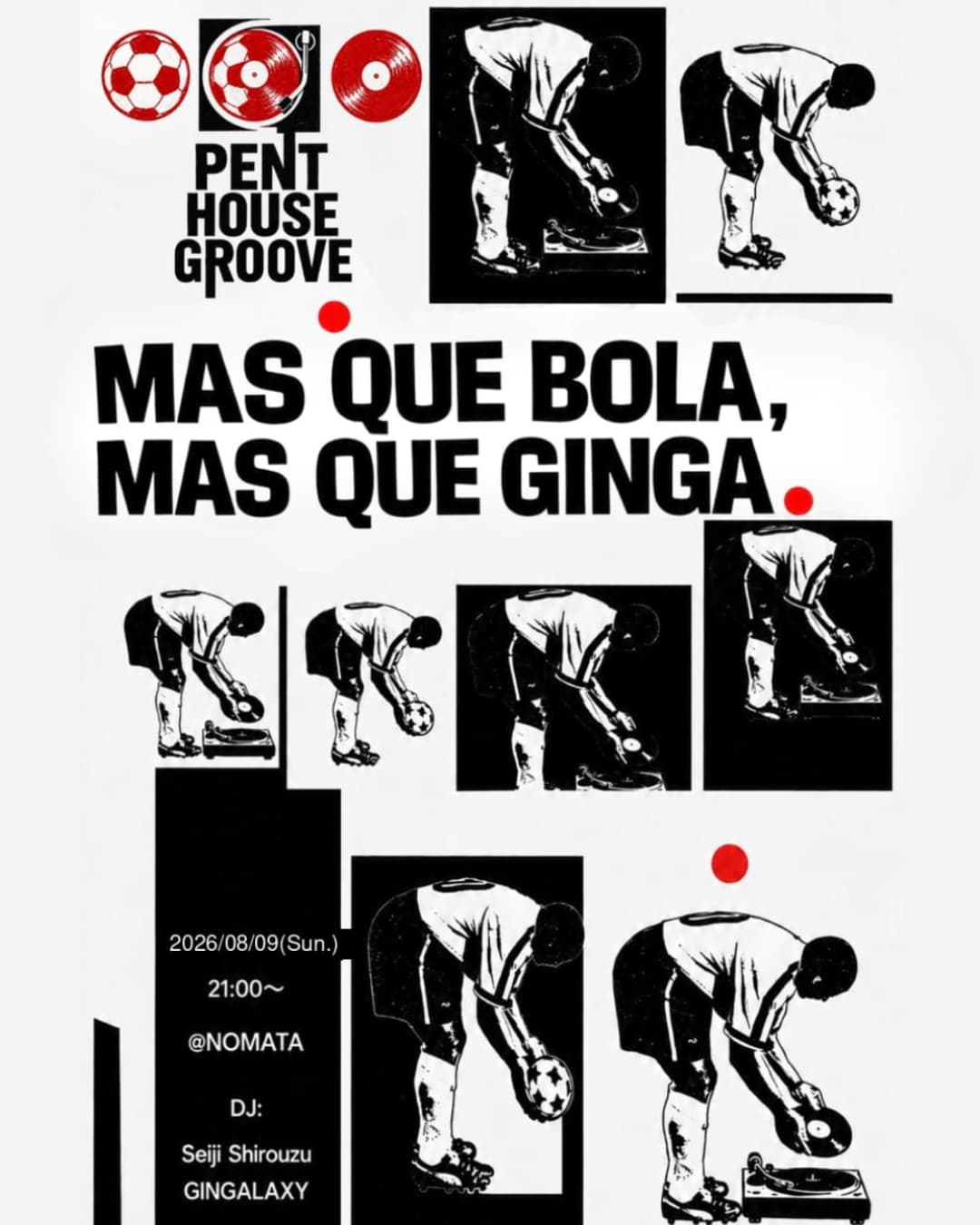
それらは刹那的なグルーヴを乗せて人を感動させるものだというメッセージを込めて、イベント名は“MAS QUE BOLA, MAS QUE GINGA”(ただのボールではない、ただのGINGAではない)としました。
PENTHOUSE GROOVE “MAS QUE BOLA, MAS QUE GINGA” DJ Party
2026年8月9日(日)
21:00 START
at NOMATA(福岡市中央区薬院2-17-26 JUNビル)
また、このテーマを形にした
PENTHOUSE GROOVE “MAS QUE BOLA, MAS QUE GINGA” T-shirt
も制作しました。
音楽とサッカーに共通する、人間だけが持つグルーヴをデザインへ落とし込んだ一枚です。
ぜひイベントと合わせてチェックしていただければ嬉しいです。
🌐 Website
https://penthousegroove.com
👕 BASE
https://pnthsgroove.base.shop/items/150962664
TAKE A BREAK Vol.9|MAS QUE BOLA, MAS QUE GINGA
In Take A Break Vol.9, I’d like to share some thoughts inspired by watching football, something I’ve recently become absorbed in.
It all began when I heard that this year’s World Cup might be the last for players such as Lionel Messi, Cristiano Ronaldo, and Neymar, and thought I might watch it again for the first time in a while.
At first, I simply intended to enjoy the matches. But the more I watched, the more I realized just how much football and music have in common.
The first similarity is that both have their own “theory.”
Football has tactics, while music has music theory.
There is no doubt that these frameworks play an essential role in making both football and music enjoyable for people.
And yet, the moments that truly electrify us seem to arise from a kind of spontaneity that goes beyond theory.
I believe this spontaneity may be the most remarkable quality shared by football and music.
A pass no one could have anticipated.
A dribble born from a flash of inspiration.
A musical exchange that could only happen live.
A rhythm that falls ever so slightly ahead of or behind the beat.
Perhaps it is precisely these moments—moments that cannot be deliberately manufactured—that thrill and move us.
In an age of increasingly sophisticated AI and analytical technology, both football tactics and music production are becoming ever more systematized.
Even so, I feel that what ultimately moves the human heart is the fleeting groove that only people can create.
That is why we never tire of watching or listening, no matter how many times we return.
Both football and music remind us that something has value precisely because it cannot be reproduced.
As I reflected on this, I found myself rediscovering what makes Brazil such a fascinating country.
In Brazil, there is a word: “GINGA.”
A distinctive rhythm expressed through the sway of the body.
Rooted in playfulness, it can also be understood as a kind of openness—a space for freedom and improvisation.
A deeply human groove that technique alone cannot explain.
I believe this feeling of GINGA flows through both Brazilian music and Brazilian football.
This World Cup helped me realize that GINGA is exactly why I feel such a powerful attraction to Brazil.
For the next PENTHOUSE GROOVE, I built the music selection around GINGA as its theme.
In both football and music, there is a spontaneity that can only come from being human.
I hope to express the brilliance of those fleeting moments through music.
Football is more than simply carrying a ball toward a goal.
GINGA is more than simply swaying the body.
With the message that both can move people through fleeting moments of groove, I named the event “MAS QUE BOLA, MAS QUE GINGA”—more than a ball, more than GINGA.
PENTHOUSE GROOVE “MAS QUE BOLA, MAS QUE GINGA” DJ Party
Sunday, August 9, 2026
21:00 START
at NOMATA (JUN Building, 2-17-26 Yakuin, Chuo-ku, Fukuoka)
We have also created a T-shirt that brings this theme to life:
PENTHOUSE GROOVE “MAS QUE BOLA, MAS QUE GINGA” T-shirt
The design translates the uniquely human groove shared by music and football into a wearable piece.
We hope you’ll check it out together with the event.
🌐 Website
https://penthousegroove.com
👕 BASE
https://pnthsgroove.base.shop/items/150962664
note 別編集版 / Read on note
note には別編集版も公開中です。あわせてお楽しみください。
A separately edited version is also available on note. We hope you enjoy it.
vol.8 Analog Vibes from Bali
Photos

TAKE A BREAK Vol.8|Analog Vibes from Bali
Take A Break vol.8では、最近のちょっとしたマイブームについて書いてみようと思います。
最近、コーヒーに少しずつハマっています。
もちろん味そのものも好きなのですが、それ以上に惹かれているのは、コーヒーの奥にある文化や土地の気配です。
私たちの身の回りを見渡してみると、日常を支えているものの多くは、とても現代的で、都市的で、デジタルなものばかりです。スマートフォン、PC、SNS、キャッシュレス決済。便利で、速くて、正確で、効率的なものに囲まれて生活しています。
お洒落なカフェもまた、そうした現代的な都市文化の象徴のように見えることがあります。洗練された内装、計算された照明、無駄のないメニュー、整ったロゴやパッケージ。そこには確かに、今っぽさや先進性があります。
しかしそのカフェで出てくる一杯のコーヒーについて考えてみると、興味深い逆転が起きているように感じます。
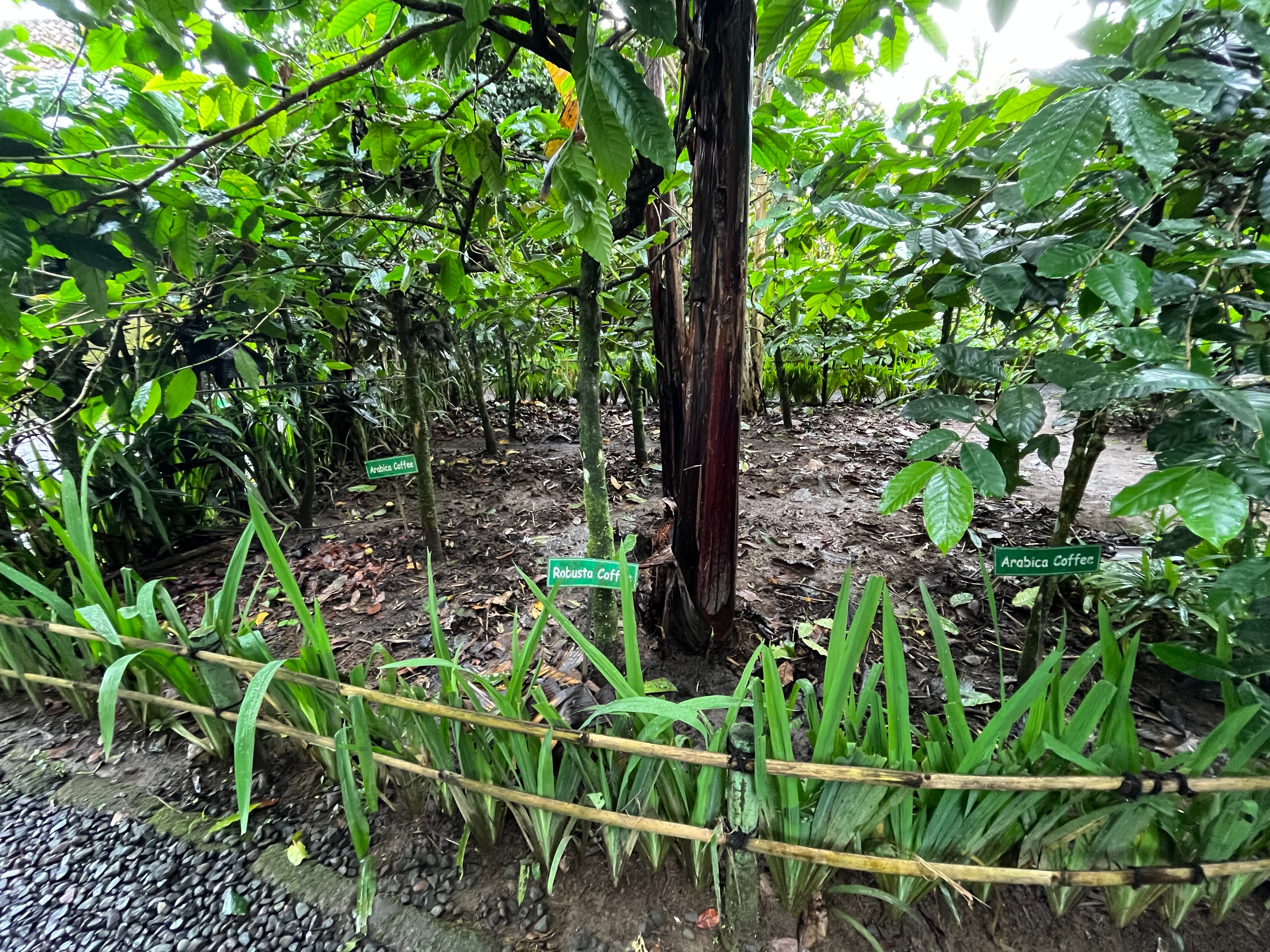
コーヒー豆は、最新のデジタル技術によってゼロから作られるものではありません。赤道付近のコーヒーベルトと呼ばれる地域で、気候、土壌、標高、雨、日差し、そして人の手によって育てられます。そこには、都市のスピードとはまったく違う時間が流れています。
豆を育てる人がいて、収穫する人がいて、乾燥させ、選別し、焙煎し、淹れる人がいる。
一杯のコーヒーは、便利さや効率だけでは辿り着けない、土地と身体の記憶のようなものを含んでいる気がします。
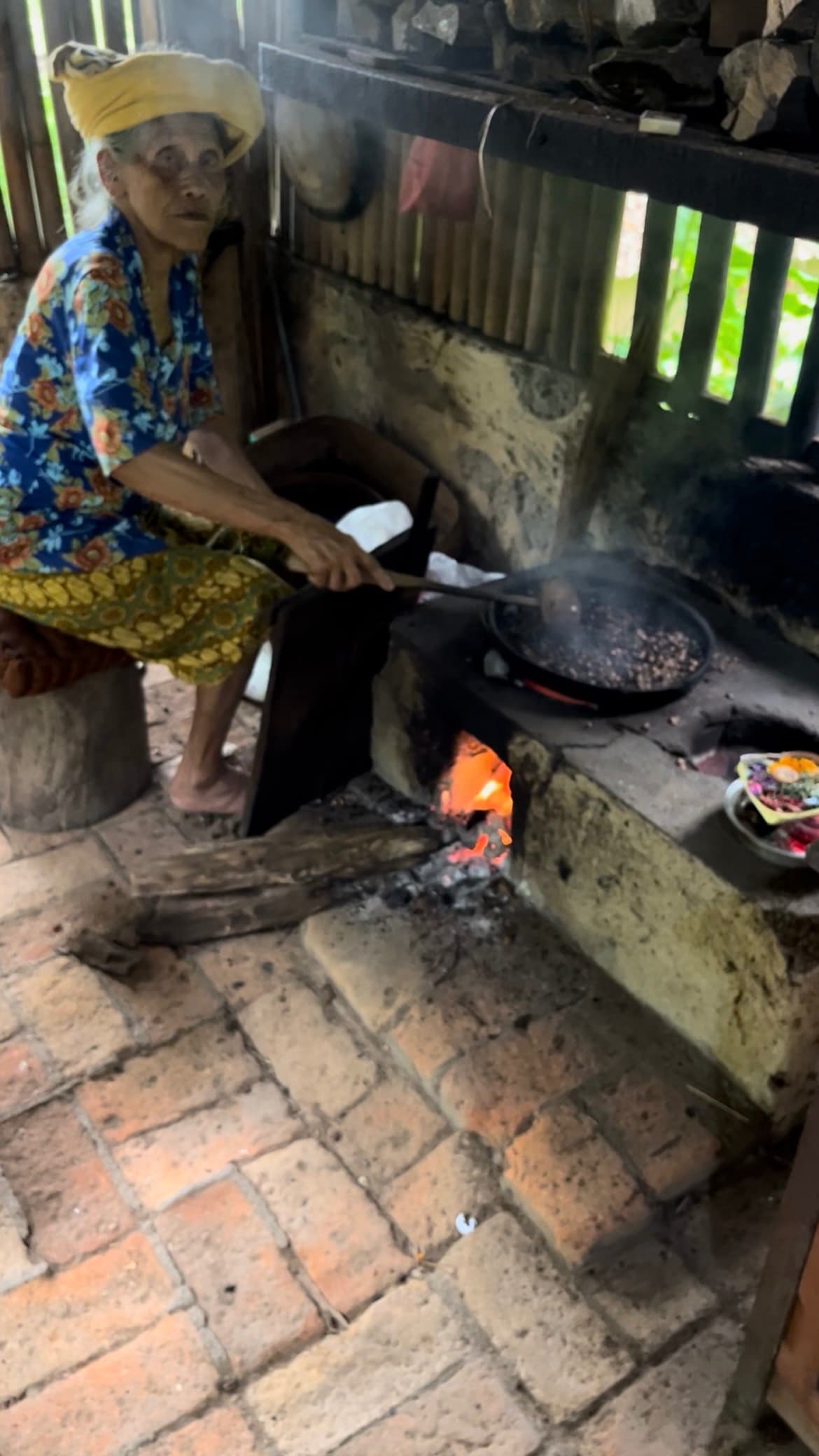
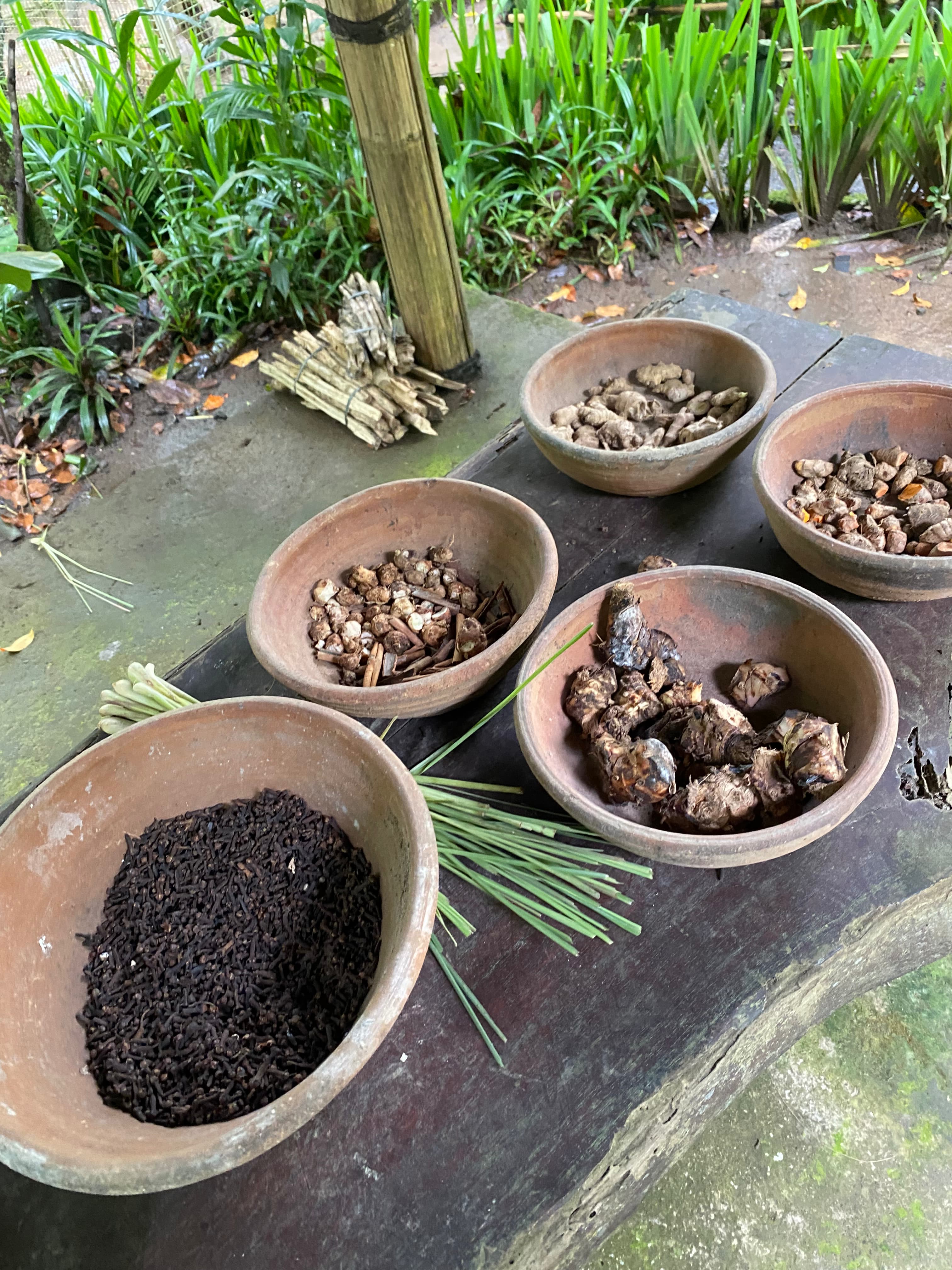
以前、バリでコーヒー農園を訪れたことがあります。そこで見たのは、現代的な工場というよりも、もっとアナログな世界でした。豆が育ち、収穫され、焙煎され、私たちのもとへ届くまでの過程には、人の手と自然の力が濃く残っていました。
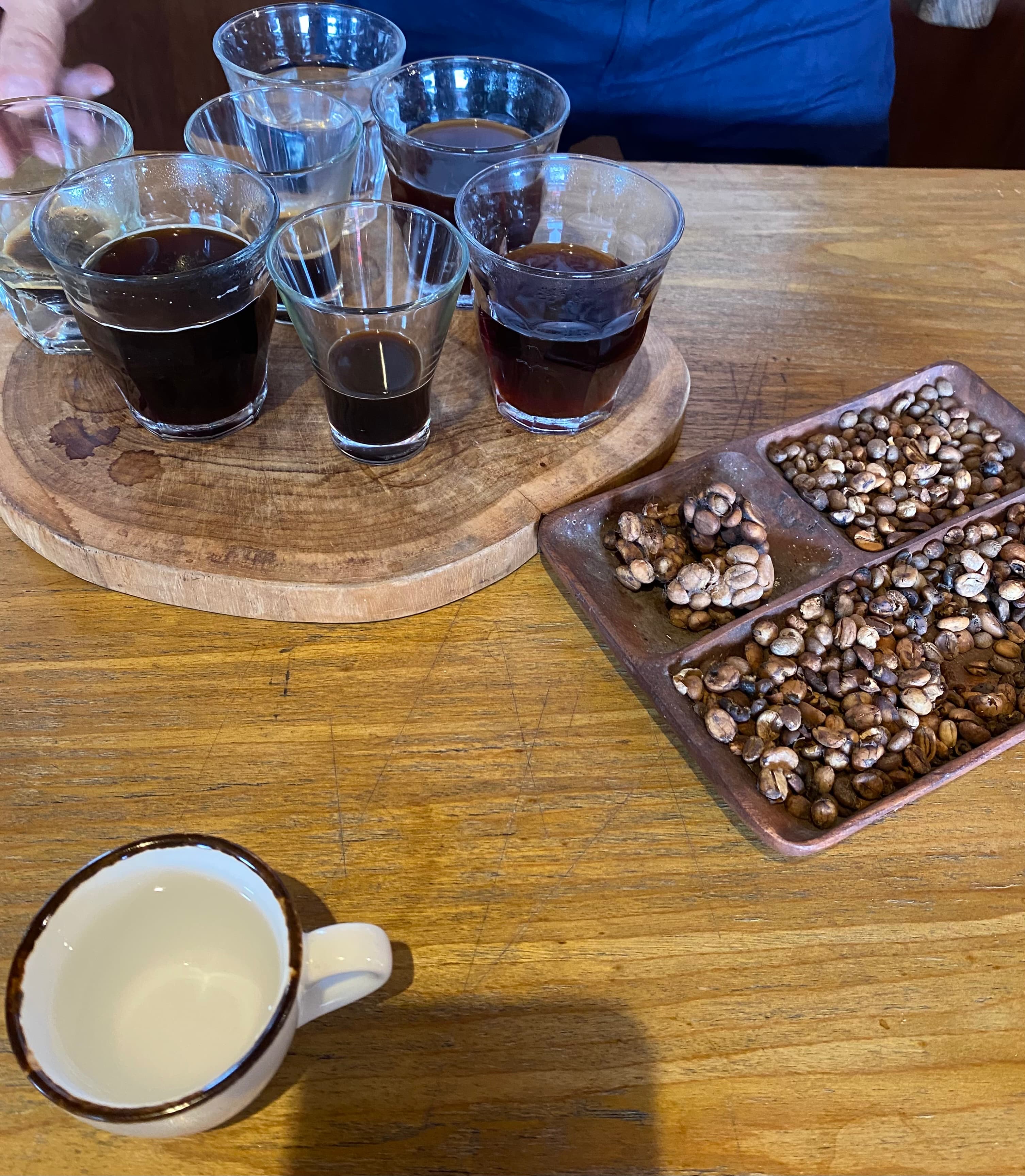
中でも、コピ・ルアクと呼ばれるジャコウネココーヒーは、非常に特殊な存在です。ジャコウネコがコーヒーチェリーを食べ、その消化過程を経た豆を使うことで知られています。世界で最も高価なコーヒーの一つとして語られることもあります。
こうした発想は神秘的とさえ呼べるような偶然性があります。
人間が最新技術で味を設計するのではなく、生き物の身体や自然の偶然性が、味の一部になっている。
それは、デジタルで管理された世界とは対極にある、予測できないものの魅力なのかもしれません。
そして、バリにはコーヒーだけでなく、音楽の面でも強く惹かれるものがあります。
その一つがガムランです。
ガムランは、インドネシアのジャワやバリに伝わる伝統的な合奏音楽で、金属打楽器やゴング類を中心に構成されます。特にバリのガムランには、複数の奏者が細かいフレーズを噛み合わせることで生まれる、独特のスピード感と揺らぎがあります。
あの音を聴いていると、単にリズムが正確かどうかでは説明できないものを感じます。
機械のように均一な正確さではなく、人と人が同じ場にいて、互いの呼吸や身体感覚を頼りに音を重ねていくことで生まれるグルーヴ。そこには、譜面やデータだけでは捉えきれない神秘性があります。
そして日本にも、そんなバリの音楽からインスピレーションを受けたGroup Of Godsという作品があります。
こちらから視聴できます
この作品は、Major Force周辺の文脈から生まれた1992年の国産エキゾチカ作品で、バリでの録音を含み、スティールギターとバリのガムランを組み合わせる実験として語られています。
その中でも「NUHIKA」は、金属的な響き、儀式的な空気、南国的でありながらどこか浮遊感のあるムードが濃く出ている曲だと思います。
面白いのは、Group Of Godsがバリ音楽をそのまま民族音楽として提示しているわけではないところです。バリの神秘性やガムランの響きを、90年代初頭の日本のクラブ、ラウンジ、エキゾチカの感覚に落とし込んでいる。
つまり、バリの音楽的な要素が、日本の感性を通してもう一度形を変え、新しい音楽として生まれ変わっているのです。
コーヒーも音楽も、現代ではデータ化したり、再現したり、効率化したりすることができます。特定の楽器の音をサンプリングすることも、リズムを完璧に揃えることも、今では難しいことではありません。
でも、正確であることと、心を動かすことは必ずしも同じではありません。
人間の演奏にあるわずかな揺れ。土地に根差した音。自然や偶然が入り込む味。そういったものの中には、再現性がないからこそ生まれる美しさがあります。
コーヒーを飲むことも、レコードを聴くことも、ある意味では少しだけ現代のスピードから離れる行為なのかもしれません。
便利さや正確さから一度距離を置いて、土地、人、身体、偶然、時間の流れに耳を澄ませる。
今回のTake a break vol.8では、そんなコーヒーと音楽に共通する“アナログな感動”について、少しだけ思案を巡らせてみました。
そしてアナログな感動に触れてみたいと思ったら、PENTHOUSE GROOVEのYouTubeもご拝聴いただけますと幸いです。
TAKE A BREAK Vol.8|Analog Vibes from Bali
In Take A Break Vol.8, I’d like to write about a small personal fascination of mine lately.
Recently, I’ve been getting more and more into coffee.
Of course, I love the taste itself, but even more than that, I’m drawn to the culture and the sense of place that seem to exist behind each cup.
When we look around at the things that support our daily lives, so much of it feels highly modern, urban, and digital. Smartphones, PCs, social media, cashless payments. We live surrounded by things that are convenient, fast, precise, and efficient.
Stylish cafés can also appear as symbols of that kind of modern urban culture. Refined interiors, carefully designed lighting, streamlined menus, neat logos and packaging. There is certainly a sense of contemporariness and sophistication there.
And yet, when I think about the single cup of coffee served in such a café, I feel that an interesting reversal is taking place.
Coffee beans are not something created from scratch through the latest digital technology. They are grown in regions near the equator known as the coffee belt, shaped by climate, soil, altitude, rain, sunlight, and human hands. A completely different kind of time flows there—nothing like the speed of the city.
There are people who grow the beans, people who harvest them, people who dry them, sort them, roast them, and brew them.
A single cup of coffee seems to contain something like the memory of land and body—something that convenience and efficiency alone cannot reach.
I once visited a coffee plantation in Bali. What I saw there was not so much a modern factory as a far more analog world. In the process by which the beans are grown, harvested, roasted, and finally delivered to us, the force of nature and the touch of human hands remained vividly present.
Among them, kopi luwak—the coffee known for passing through the digestive process of a civet after it eats coffee cherries—is an especially unusual presence. It is sometimes spoken of as one of the most expensive coffees in the world.
There is something almost mystical in the chance-like nature of such an idea.
Rather than human beings designing flavor through the latest technology, the bodies of living creatures and the contingencies of nature become part of the taste itself.
Perhaps that is the appeal of what cannot be predicted—the opposite of a digitally managed world.
And in Bali, there is not only coffee, but also something deeply compelling in music.
One example is gamelan.
Gamelan is a traditional ensemble music from Java and Bali in Indonesia, centered around metallophones and gongs. Balinese gamelan in particular carries a unique sense of speed and shimmer, born from multiple players interlocking intricate phrases.
When I listen to that sound, I feel something that cannot be explained simply by whether the rhythm is precise or not.
It is not the uniform precision of a machine, but a groove created when people share the same space and layer sound by relying on one another’s breathing and bodily sense. There is a mystery there that cannot be fully captured by notation or data alone.
And in Japan, too, there is a work called Group Of Gods that seems to have drawn inspiration from the music of Bali.
You can listen to it here.
This work is a Japanese exotica piece from 1992 that emerged from the context around Major Force. It is discussed as an experiment combining steel guitar and Balinese gamelan, and it also includes recordings made in Bali.
Among its tracks, “NUHIKA” especially strikes me as a piece rich in metallic resonance, ritual atmosphere, and a mood that feels tropical yet strangely weightless at the same time.
What is fascinating is that Group Of Gods does not simply present Balinese music as ethnographic music in its original form. Instead, it translates Bali’s mystique and the sound of gamelan into the sensibility of early-1990s Japanese clubs, lounges, and exotica.
In other words, Balinese musical elements are transformed once again through a Japanese sensibility and reborn as new music.
Today, both coffee and music can be digitized, reproduced, and optimized. It is no longer difficult to sample the sound of a specific instrument or align rhythms with perfect precision.
But being accurate and moving the heart are not necessarily the same thing.
The slight fluctuations in human performance. Sounds rooted in a place. Tastes into which nature and chance have entered. In such things, there is a beauty that exists precisely because it cannot be fully reproduced.
In a way, drinking coffee and listening to records may be acts of stepping ever so slightly outside the speed of modern life.
Taking a little distance from convenience and precision, and listening instead to land, people, the body, chance, and the flow of time.
In this Take A Break Vol.8, I wanted to spend a little time reflecting on that kind of “analog emotion” shared by coffee and music.
And if this makes you want to experience that kind of analog emotion for yourself, I’d be delighted if you also listened to PENTHOUSE GROOVE on YouTube.
note 別編集版 / Read on note
note には視点を変えた別バージョンも公開中です。あわせてお楽しみください。
We’ve also published an alternate cut on note—give it a read.
vol.7 Tokyo Record Diggin’
Photos

TAKE A BREAK Vol.7|Tokyo Record Diggin’
Take A Break vol.7では、東京でのレコードライフについて書いてみようと思います。
Take A Break vol.5でも取り上げましたが、先日、神奈川から東京へ引っ越しました。
神奈川にいた頃はもっぱら徒歩圏内のディスクユニオンに通っていましたが、東京の住まいの近くには残念ながらレコード店がありませんでした。
しかしながらさすがは東京、少し足を伸ばせばさまざまなレコード店が軒を連ねています。
今回はその中でも特にお気に入りのお店を紹介させていただければと思います。
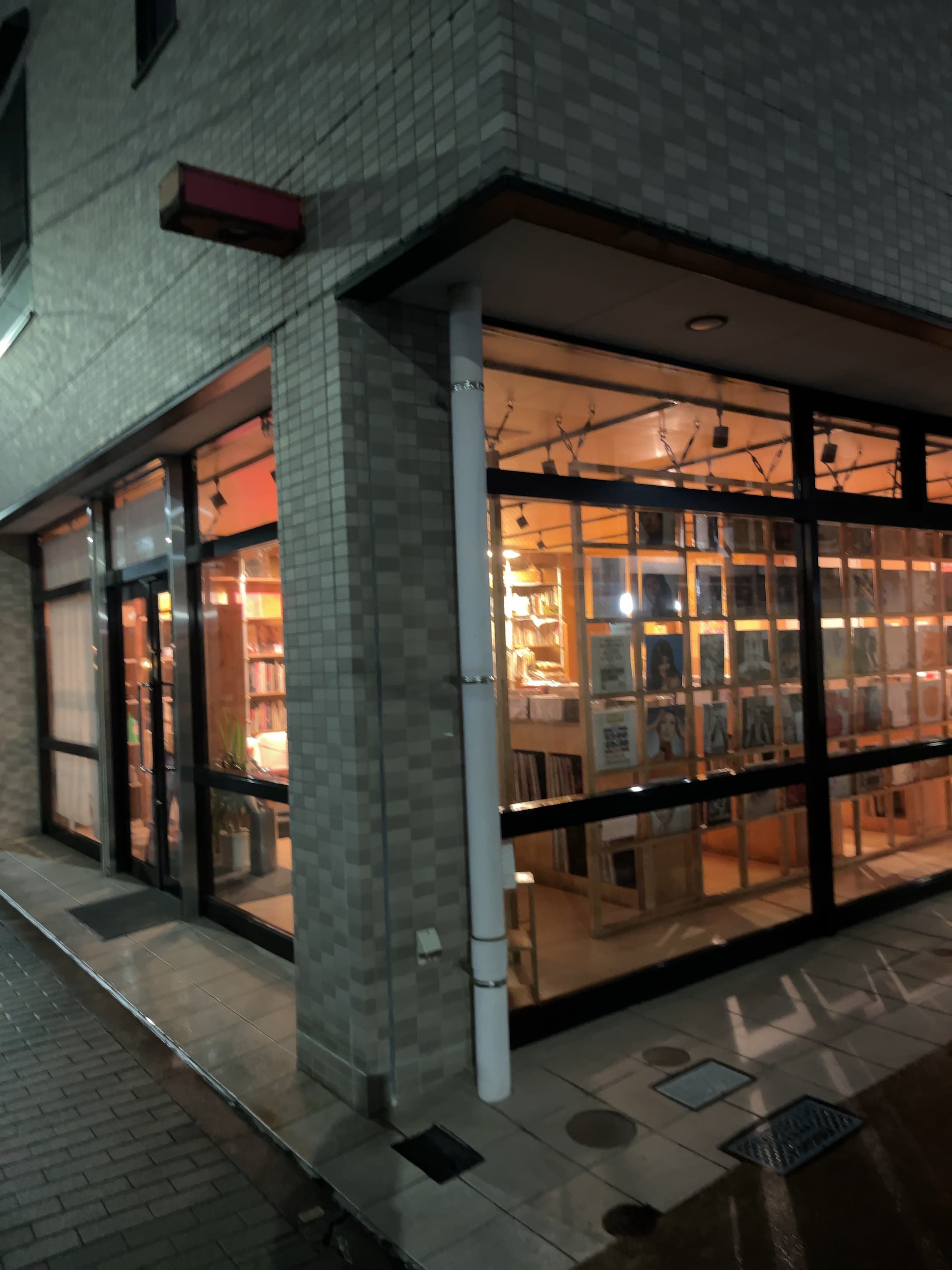
私の東京のおすすめレコード店は「ダウンタウンレコード」さんです。
この店舗は江東区の東陽町にあり、私の住まいからは少し遠いのですが、近くを訪れた際にはつい立ち寄ってしまいます。
この店舗にはいくつか特筆すべき魅力があります。
一点目は、何と言っても価格が安いことです。
1枚50円という破格のレコードも取り扱いがあります。その名も「ま、ええがな」レコード。
このネーミングセンスもお気に入りポイントです。
このような価格での販売は利益はほとんどないのではないかと思います。
それでも続けられているところに、店主の方が売り上げ以上に大切にしているレコードひいては音楽への愛を感じます。
同じような音楽好きの人たちを想っての粋な計らいのようにも感じられ、単なる商売ではないところがとても素敵です。
この店舗はクレジットカードなどは使えず、決済は現金のみとなっています。
一見不便なようにも思いますが、実はここも気に入っているポイントです。
というのも、このお店には「ま、ええがな」レコードがあるため、数百円でもレコードディグを楽しむことができるからです。
数百円の小銭を握りしめ、今日はどんなレコードを探してみようか、思い切って普段は買わないジャンルにも挑戦してみようかなど、大人になって久しく忘れていた少年のようなワクワクする心を思い出させてくれます。
私はここにレコードディグの醍醐味が詰まっているように思います。
デジタル社会でレコードは必要ないと思う方もいらっしゃると思います。まして現金支払いなど前時代的だと感じる方も少なくないかもしれません。
私も仕事柄電子決済やデジタル化には関心が強い方ですが、このようなアナログ文化や手触り感はとても大事にしています。
なぜなら、こうした部分に本当に人間らしい感情が隠れているように思うからです。
確かに、オンラインで商品を買ったり、デジタル音源を入手することの方が安価であったり、スムーズである部分もあるでしょう。
しかしながら、数あるレコードの中から偶然手に取ったレコードがとても好みのものだった時の喜びや、店主の方と会話を交えながら音楽的な交流をすることは、オンラインや電子取引では発生し得ない部分です。
こうした偶発性が人に喜びや発見をもたらしてくれると私は常々感じています。
したがって時に非効率だとしても、アナログな世界に触れることは私にさまざまな気づきや発見をもたらしてくれるように思います。
これは先日触れたヤン富田さんのいう「必然性のある偶然」の一端を担っている要素なのかもしれません。
そんな思案を巡らせながら、今日もダウンタウンレコードさんに遊びに行ってみようと思います。
「必然性のある偶然」を求めて、「音楽を契機とした意識の拡大」を求めて、といえばヤン富田さんに影響されすぎているのかもしれませんが、少なくともこのようなアナログな音楽の世界が私の人生を豊かにしてくれていることも確かな事実であるように感じます。
レコードに詳しくなくても、音楽の知識がなくても、レコードディグは私にこのようなかけがえのない体験をもたらしてくれるように思います。
皆様もぜひ、お近くのレコード店に足を運んでみてはいかがでしょうか。
もしそこからもっと音楽に触れたいと思ったら、PENTHOUSE GROOVEの音楽もぜひ一度聴いてみていただけたら嬉しいです。
PENTHOUSE GROOVEのイベントに足を運ぶこともまた、必然性のある偶然を呼び起こす、あなたの人生を面白くするきっかけ作りになるかもしれません。
P.S.
今回のnote別編集版では、私が実際にダウンタウンレコードさんで発見したレコードを一部紹介しています。ご興味があればお手隙の際にご一読いただけますと幸甚です。
TAKE A BREAK Vol.7|Tokyo Record Diggin’
In Take A Break Vol.7, I’d like to write about my record life in Tokyo.
As I mentioned in Take A Break Vol.5, I recently moved from Kanagawa to Tokyo.
When I was living in Kanagawa, I mostly went to a Disk Union within walking distance, but unfortunately there were no record shops near my new home in Tokyo.
Still, this is Tokyo—if you go just a little farther, you’ll find all kinds of record shops lined up across the city.
This time, I’d like to introduce one of my absolute favorites among them.
My recommendation in Tokyo is Downtown Records.
The shop is located in Toyocho, Koto City, and although it’s a little far from where I live, I always find myself stopping by whenever I’m in the area.
There are several things that make this shop especially memorable.
First of all, the prices are incredibly low.
They even carry records priced at just 50 yen each. They call them the “Ma, Eegana” records.
I’m also fond of the naming itself.
At prices like that, I imagine there can’t be much profit at all.
And yet the fact that they continue to do this makes me feel the owner’s love for records—and for music itself—goes far beyond sales.
It feels like a thoughtful gesture for fellow music lovers, and that’s exactly what makes it so wonderful: it doesn’t feel like mere business.
The shop doesn’t accept credit cards, and payment is cash only.
At first glance that may seem inconvenient, but that is actually one of the things I like about it, too.
Because they have these “Ma, Eegana” records, you can enjoy digging even with just a few hundred yen in your pocket.
Holding a few coins in my hand, wondering what kind of record I might look for today, or whether I should boldly try a genre I normally wouldn’t buy, brings back a childlike excitement I had almost forgotten as an adult.
To me, that is where the real charm of record digging lives.
I understand that some people may feel records are unnecessary in a digital age. And many may see cash-only payment as something outdated.
I myself am very interested in digitalization and electronic payments because of my work, but I still value this kind of analog culture and tactile feeling very deeply.
That is because I feel something truly human is hidden in these kinds of experiences.
Of course, buying things online or getting digital music can be cheaper and smoother in many ways.
But the joy of accidentally picking up a record among many others and realizing it is exactly to your taste, or having a musical exchange through conversation with the shop owner—those are things that can never really happen through online shopping or electronic transactions.
I have always felt that this kind of chance occurrence brings people joy and discovery.
So even if it may sometimes be inefficient, I believe that encountering the analog world brings me all kinds of realizations and discoveries.
Perhaps this is also one small part of what Yann Tomita describes as “chance with inevitability.”
With thoughts like these in mind, I think I’ll go visit Downtown Records again today.
To say that I go in search of “chance with inevitability” and an “expansion of consciousness triggered by music” may sound like I’ve been overly influenced by Yann Tomita, but at the very least, I feel it is certainly true that this analog world of music has enriched my life.
Even if you are not deeply knowledgeable about records, and even if you don’t know much about music, record digging can still offer these irreplaceable experiences.
So I hope you’ll consider visiting a record shop near you.
And if that experience makes you want to engage with music more deeply, I’d be very happy if you also gave PENTHOUSE GROOVE’s music a listen.
Attending a PENTHOUSE GROOVE event might also become a chance-with-inevitability moment—something that makes your life a little more interesting.
P.S.
In the separately edited note version this time, I introduce a few of the records I actually discovered at Downtown Records. If it interests you, I’d be grateful if you gave it a read when you have a moment.
note 別編集版 / Read on note
note には視点を変えた別バージョンも公開中です。あわせてお楽しみください。
We’ve also published an alternate cut on note—give it a read.
vol.6 必然性のある偶然
Photos
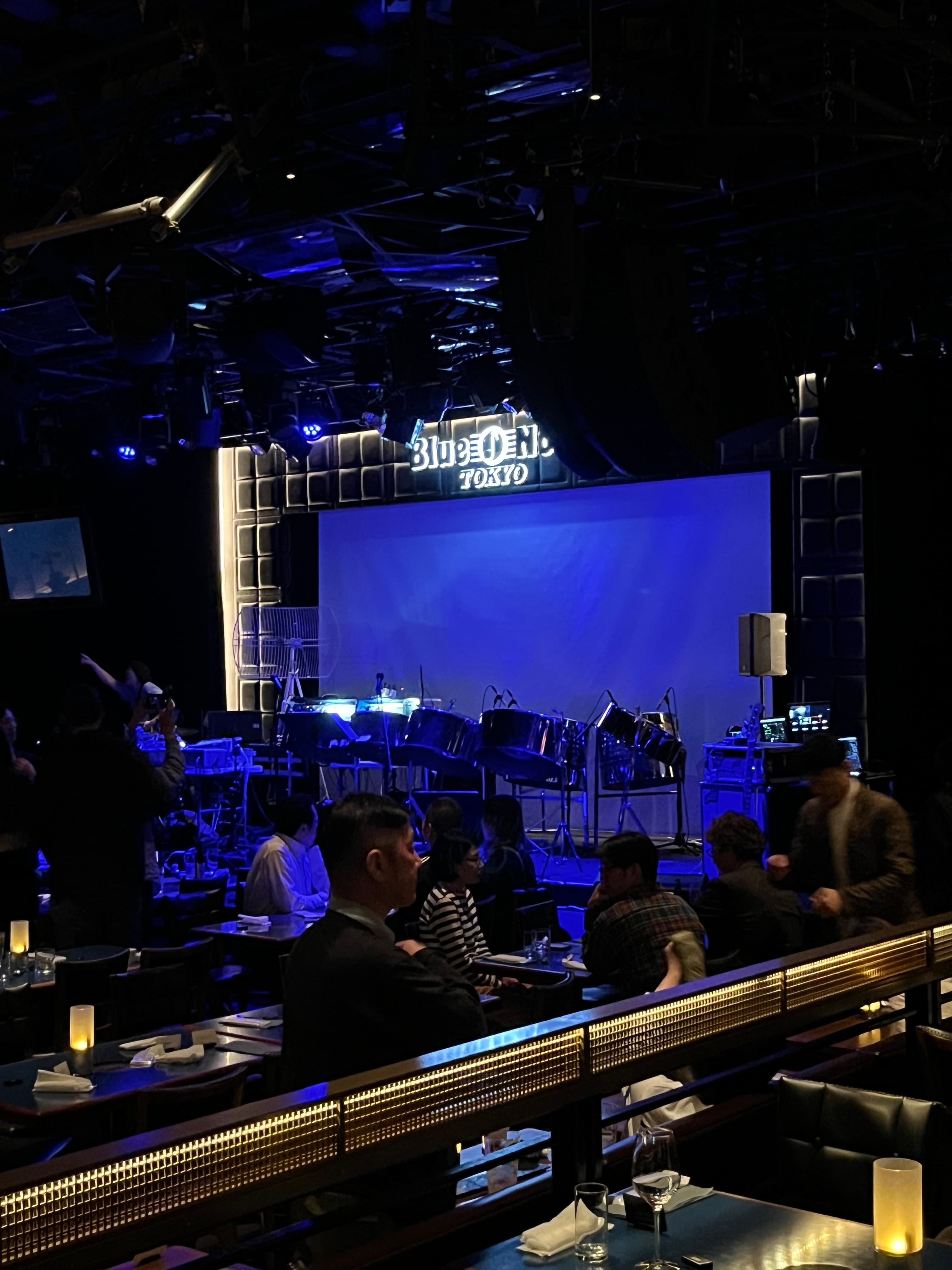

TAKE A BREAK Vol.6|必然性のある偶然
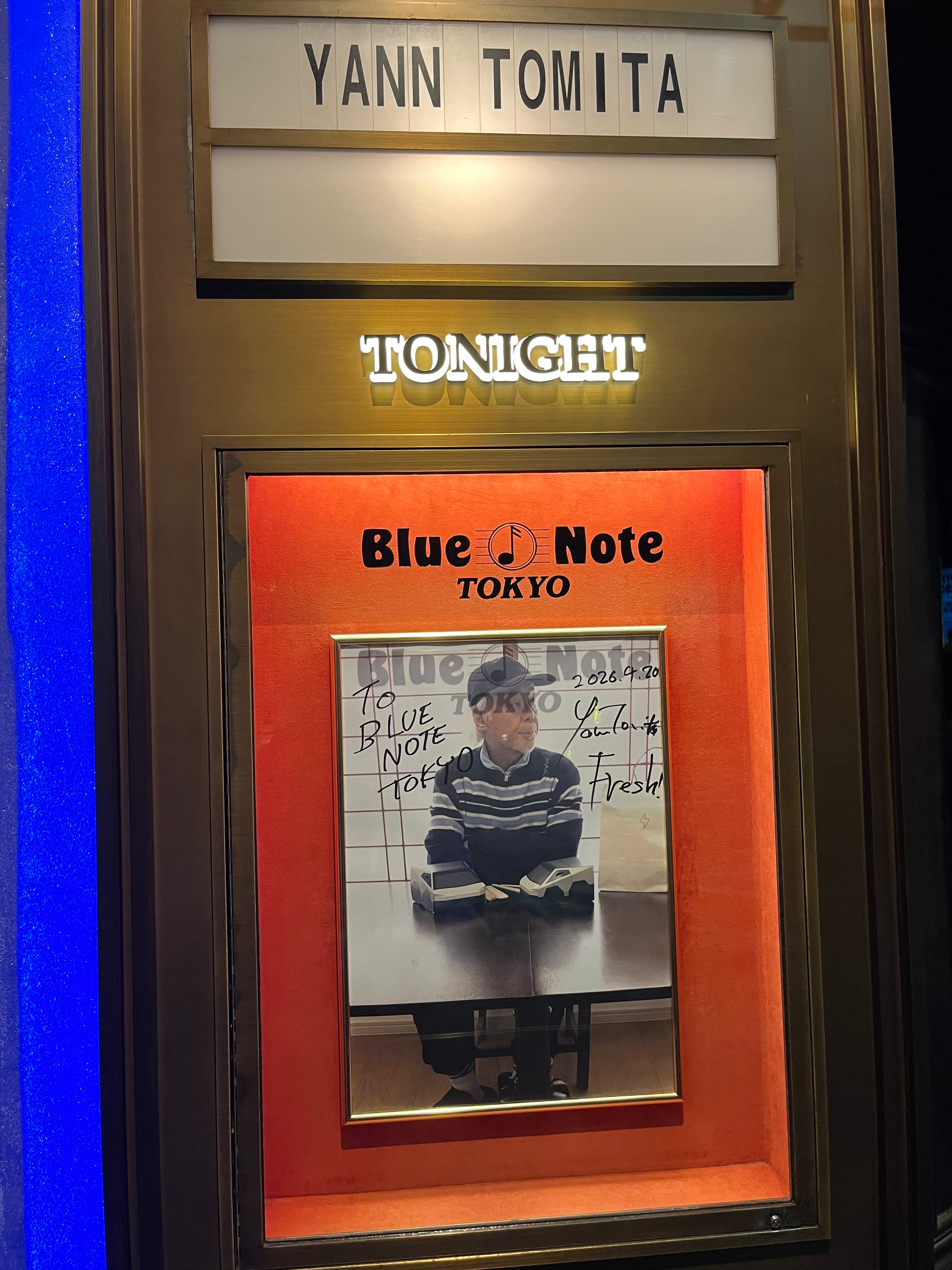
Take A Break vol.6では、先日行われたヤン富田さんのライブについて書いてみようと思います。
以前PENTHOUSE GROOVEのウェブサイトにも掲載した通り、父とヤン富田さんは以前から交流があり、私はちょうど一年前にヤン富田さんのライブに伺い、初めて直接ご挨拶をさせていただきました。
当時の記事はこちら↓
vol.1【YANN TOMITA A.S.L. SHOWCASE 2025】2025/04/17 @BLUE NOTE TOKYO
思えばあのタイミングが私にとって大きな契機だったように思います。
このライブを観にいったことをきっかけに、父とヤン富田さんがどんな音楽を一緒にやってきたのか、父は音楽とどのように向き合ってきたのか、自分は父と共にどのような音楽を追求していきたいのか考え始めるようになりました。
一年前初めてヤンさんの楽曲を生で聴いて、その実験性や独自性に強く惹かれました。
ヤンさんの言う「必然性のある偶然」には単なる「偶然」や「必然」にはない、再現性がないからこその美しさや魅力が宿るように感じます。
それが音楽に落とし込まれていることがヤンさんの楽曲に惹かれる理由なのではないかと思います。
ヤンさんの独自性に魅了される一方で、一年前のライブではどこか懐かしさのようなものも覚えていました。
その感覚の正体は父から教わってきた音楽だったのだと最近になって気づきました。
父が紡ぐ音楽には意外性のあるアイデアが各所に散りばめられています。
父のDJは楽曲をただ並べるのではなく、楽曲から連想するイメージを具現化するために様々な音源と即興で掛け合わせたり、一見かけ離れたジャンル同士を繋いだりします。
特に後者については、音楽と向き合い様々な実験から生まれる偶発性、および独自性を含んでいるように思います。
実験的な試行を経て生まれる独自性という観点が、父とヤンさんの共通点ではないかと感じました。
私はPENTHOUSE GROOVEの音楽においてこうした独自性を大切にしたいと考えています。
何故なら、この独自性が他でもないPENTHOUSE GROOVEの音楽を人々が聴きたいと思える理由になる部分であり、父と父から音楽を教えてもらった私とで創っていく音楽の根幹であるからです。
このようなことを考えながら一年前のヤンさんのライブからPENTHOUSE GROOVEとしての活動を行なってきましたが、今年のライブではまた新たな発見がありました。
去年は音楽そのものにフォーカスしていましたが、今年は二回目ということもありヤンさんの「音楽の届け方」にも注目することが出来たように思います。
ヤンさんのライブは端的に言えば「また訪れたい」と思わせる要素が大きく二つあると感じました。
一つはヤンさんのライブがその独自の世界観に浸れる体験になっていることです。ヤンさんの楽曲はその独自性ゆえに中毒性もあるように感じます。
私を含めヤンさんのファンはその世界観に浸れるという体験に高揚している部分が多分にあるのではないかと思います。
二つ目はヤンさんのライブには楽曲と同じように意外性や実験性が数多く含まれていることです。
これにより人々は未知の体験ができるということに高揚感を覚えるのではないかと感じました。
ヤンさんのライブは毎回楽曲の演奏だけでなく様々なテーマが存在します。これが毎回人を魅了し続ける要因の一つになっているように思います。
このようにヤンさんが楽曲そのもののみならずライブという体験においてもヤンさんらしさ、ヤンさんらしい独自性を持って「音楽による意識の拡大」を人々にもたらし続けていることに気づけたのは今回大きな学びでした。
そしてヤンさんの音楽、ヤンさんの創作物は知れば知るほどもっと知りたいと思う不思議な魅力があることも今回改めて感じました。
今年のライブも去年以上に「音楽による意識の拡大」として自分にとって大きな意味を持つイベントであり、何より楽しかったと感じました。来年のライブも楽しみにしつつ、ここからまた一年学んだことを活かしながらPENTHOUSE GROOVEとしての活動に取り組んでいきたいと思います。
そして直近では自分がヤンさんのライブから学んだこの二点を次回のPENTHOUSE GROOVEのイベントにも活かしてみようと思っています。
「PENTHOUSE GROOVEらしい音楽」を曲げずに追求することはもちろん、
自分たちらしい音楽をどう届けるか、どう楽しんでもらうかに焦点を当て、今回は来場者限定の体験要素を増やしてみようと考えています。
PENTHOUSE GROOVEの独自性が人の心を掴んで離さないようなものにできたらという願いも込めて、今回のイベントは「Prisoner Of Groove」と称して開催させていただきます。
その内容については当日のお楽しみとさせていただきますが、PENTHOUSE GROOVEの音楽を気に入ってくれている方はもちろん、音楽を好きになるきっかけにもなるような場に出来たらと思っています。
父に教わり、ヤンさんに学んだPENTHOUSE GROOVE流の「音楽による意識の拡大」を皆様に楽しんでいただけますと幸いです。
お楽しみに。
P.S.
Take A Break vol.6 note別編集版では、ヤン富田さんがキーワードとしている「必然性のある偶然」について思案を巡らせてみました。
お手隙の際にご一読いただけますと幸甚です。
TAKE A BREAK Vol.6|Chance with Inevitability
In Take A Break Vol.6, I’d like to write about the recent live performance by Yann Tomita.
As previously mentioned on the PENTHOUSE GROOVE website, my father and Yann Tomita have known each other for some time, and exactly one year ago I attended Yann’s live show and had the chance to greet him in person for the first time.
The article from that time is here ↓
vol.1【YANN TOMITA A.S.L. SHOWCASE 2025】2025/04/17 @BLUE NOTE TOKYO
Looking back, I feel that timing became a major turning point for me.
Going to that live show made me start thinking about what kind of music my father and Yann Tomita had created together, how my father had engaged with music throughout his life, and what kind of music I wanted to pursue together with him.
When I first heard Yann’s music performed live a year ago, I was strongly drawn to its experimental spirit and originality.
In what Yann calls “chance with inevitability,” I sense a kind of beauty and attraction that cannot be found in mere “chance” or mere “inevitability”—a beauty that exists precisely because it cannot be reproduced.
I believe that this quality, when translated into music, is one of the reasons I am so drawn to Yann’s work.
While I was captivated by Yann’s uniqueness, I also remember feeling a strange sense of nostalgia at last year’s live show.
Only recently did I realize that the source of that feeling was the music my father had taught me over the years.
The music my father weaves is filled with unexpected ideas in many places.
His DJ style is not simply about lining up tracks one after another. To bring the images suggested by music into a tangible form, he improvisationally combines various sound sources and sometimes connects genres that seem far removed from one another.
Especially in the latter, I feel there is a sense of accident and originality born from experimentation and from seriously engaging with music itself.
It struck me that this sense of individuality born through experimental trial and error may be one of the shared qualities between my father and Yann.
In PENTHOUSE GROOVE’s music, I want to value this kind of originality as much as possible.
That is because this uniqueness is exactly what makes people want to listen to PENTHOUSE GROOVE’s music in the first place, and it forms the very core of the music that my father and I—having learned music from him—are trying to create together.
With these thoughts in mind, I have continued my activities as PENTHOUSE GROOVE ever since Yann’s live performance a year ago, and this year’s show brought me new discoveries once again.
Last year, I was focused mainly on the music itself, but this time—being my second visit—I felt I was also able to pay attention to how Yann “delivers” music.
Simply put, I felt Yann’s live performances contain two major elements that make people want to come back again.
The first is that his live shows become an immersive experience in his singular world. Because of their originality, Yann’s compositions seem to carry an almost addictive quality.
I believe many of Yann’s fans, myself included, are deeply exhilarated by the experience of being able to sink into that world.
The second is that Yann’s live performances, like his music itself, are full of surprise and experimentation.
Because of this, I feel that people are excited by the possibility of having an unknown experience.
Each of Yann’s live shows has not only musical performances but also different themes, and I believe this is one of the reasons his performances continue to fascinate people every time.
Realizing that Yann continues to bring an “expansion of consciousness through music” to people not only through the music itself but also through the live experience—with a distinctly Yann-like originality—was a major lesson for me this time.
I was also reminded once again that the more you learn about Yann’s music and creative works, the more you want to know. There is something mysteriously magnetic about them.
This year’s live performance, even more than last year’s, became a deeply meaningful event for me as an “expansion of consciousness through music,” and above all, it was simply a great joy. While already looking forward to next year’s live show, I hope to keep applying what I have learned over the coming year to PENTHOUSE GROOVE’s own activities.
More immediately, I would like to bring these two lessons I learned from Yann’s live show into PENTHOUSE GROOVE’s next event as well.
Of course, we will continue to pursue “music that is true to PENTHOUSE GROOVE” without compromise,
but this time we are also focusing on how to deliver our music in a way that feels true to us, and how to make it enjoyable for people, by increasing the number of experience-based elements available only to those who attend.
With the hope that PENTHOUSE GROOVE’s originality can become something that truly captures people’s hearts and never lets go, we will be holding this event under the title “Prisoner Of Groove.”
The details will remain a surprise until the day itself, but I hope it will become not only a place for those who already enjoy PENTHOUSE GROOVE’s music, but also a place that could serve as a gateway for people to fall in love with music itself.
I truly hope you will enjoy PENTHOUSE GROOVE’s way of “expanding consciousness through music,” something I learned from my father and from Yann.
Please look forward to it.
P.S.
In the separately edited note version of Take A Break Vol.6, I reflected on “chance with inevitability,” a phrase Yann Tomita often uses as a key concept.
I would be grateful if you could give it a read when you have a moment.
note 別編集版 / Read on note
note には視点を変えた別バージョンも公開中です。あわせてお楽しみください。
We’ve also published an alternate cut on note—give it a read.
vol.5 旅の栞
Photos
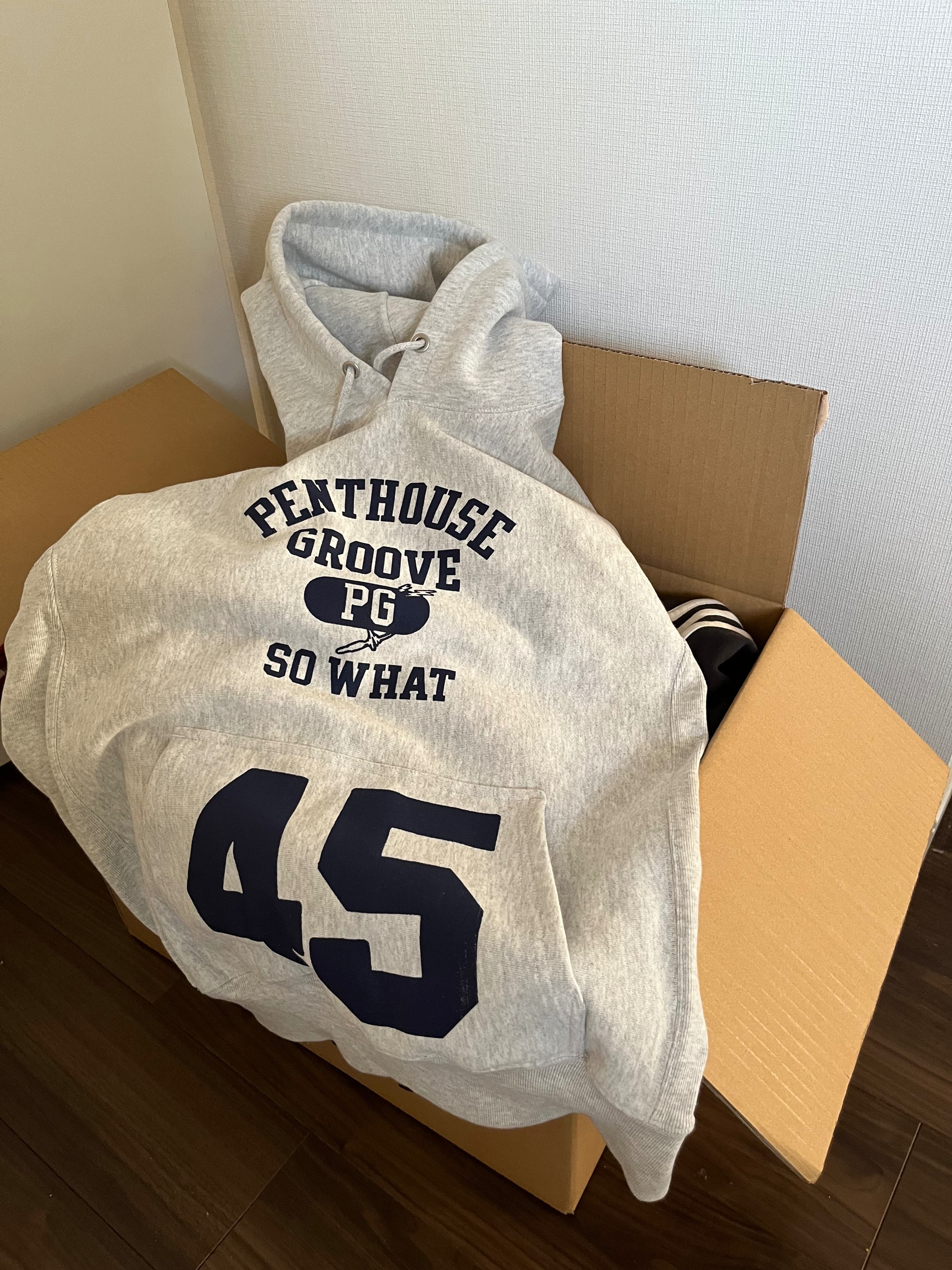
TAKE A BREAK Vol.5|旅の栞
Take A Break vol.5では、私事ではありますが先日実施した引越しについて徒然なるままに書き連ねてみようと思います。
引っ越しの荷造りは、未来への準備であると同時に過去を想う時間でもありました。
私は九州、関西、関東と住まいを移していて、これに伴い増えていったレコードたち。久しぶりに針を落としたものもちらほら。すると買ったことすら忘れていた盤から、当時の景色が一瞬で立ち上がってきました。京都でふらりと歩いていた午後。友達と車中泊した名古屋の夜。
私にとってレコードは「旅の栞」でした。
栞を頼りに何度でもあの時へ帰れるような感覚があります。旅行だけではなく、日々の生活の一瞬一瞬についても、レコードから流れる音楽は栞のように思い出の所在を留めてくれる気がします。
引っ越し直前、最後にかけたのは「浜口庫之助 - ドライビング・ラブ」。
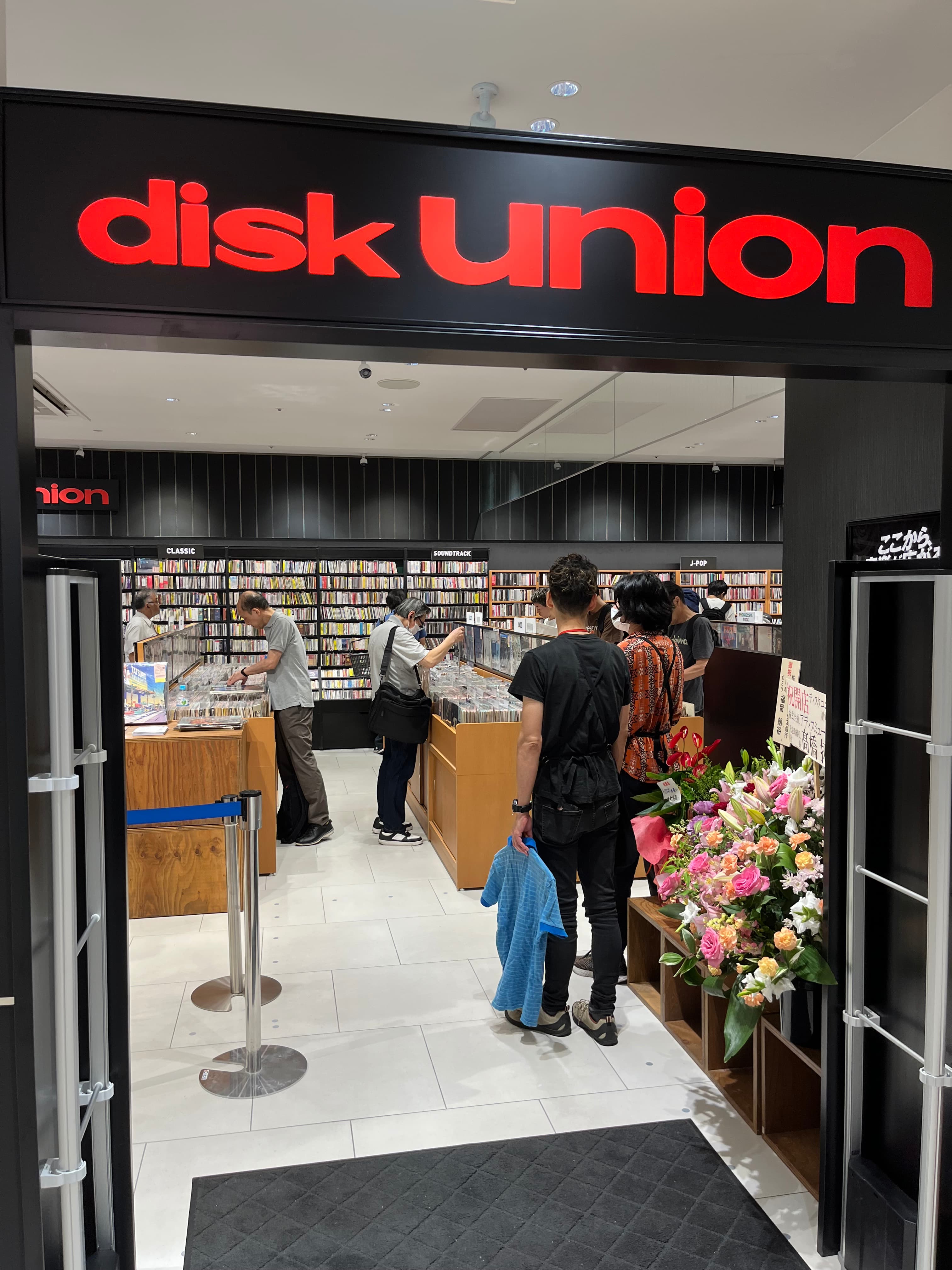
川崎にできたディスクユニオンのオープン初日、昼休みに抜け出して掘り当てた一枚です。
イベントでどう繋ごうかと胸を高鳴らせる帰り道まで含めて、この曲は私の思い出の1ページに挟まっています。
そしてこの栞は、私ひとりのものではないと知った出来事もありました。
名古屋で立ち寄ったバナナレコードの話を父にすると、父も昔訪れたことがあると言います。しかもそこで買ったのが、以前父に教えてもらい私も大好きなWeldon Irvineの「Jungle Juice」が入った盤だったとのこと。
奇しくも親子二世代でバナナレコードにお世話になっていたことを知り、父の栞が、いつの間にか私の栞にもなっているような感覚がありました。
そしてもう一枚、思い出深いのが Joe Gallardo の「Bird of Beauty」。
これは関西に住んでいた頃に父から欲しいレコードが関西のレコード店に売っているらしいから買ってきて欲しいと頼まれて買いに行ったものです。当時通っていた美容室から程近く、私が行き慣れた場所に福岡に住んでいて関西の近況に明るくないはずの父が気になっている店があるというのもなんだか不思議な感じで、こちらもレコードが紡いでくれた物語であるように感じました。
頼まれもののはずが、気になって先に針を落としてしまった時の衝撃をこの曲を聴くと今でも思い出します。結局父ではなく私がイベントでこの曲を披露したというエピソードも含めて、今では大切な思い出の1ページです。
都内での新生活が始まり、これからまた新しい「旅の栞」が増えていくはずです。
まだ見ぬレコードとの出会いは私の心をさらに豊かにしてくれるでしょう。しかしそれ以上に、過去の栞たちが何度でもあの頃の心情を呼び戻してくれることと思います。
PENTHOUSE GROOVEの活動を通して、その一部を皆さまにも共有できたら嬉しいです。
私が父にしてもらったように、私も皆様に音楽を通して人生の栞を共有していくことができたらと思っています。
P.S.
早いものでPENTHOUSE GROOVEのウェブサイトは1周年を迎えました。
皆様のおかげでPENTHOUSE GROOVEの認知も拡大してきており、イベントの動員数も徐々に増えつつあります。
次回はゴールデンウィーク頃にまたイベントを予定しておりますので、ぜひ足を運んでいただけますと幸いです。皆様とまたお会いできる日まで、PENTHOUSE GROOVEのウェブサイトは毎日更新しておりますのでこちらも引き続きぜひチェックしていただければと思います。
次回イベントの詳細はもちろん、皆様の音楽体験がより豊かなものになるようレコメンド曲の紹介やスペシャルグッズの販売にも注力しております。
各種新コンテンツもこのウェブサイトを通して発信予定ですのでお楽しみに。
TAKE A BREAK Vol.5|Bookmarks of the Journey
In Take A Break Vol.5, this is a personal note—an unfiltered, meandering reflection on my recent move.
Packing for a move was both preparation for the future, and time to think about the past.
I’ve moved from Kyushu, to Kansai, to Kanto, and with each move my record collection grew. This time, I dropped the needle on records I hadn’t played in a long while. And suddenly, scenes rose up instantly from albums I’d even forgotten I owned—an afternoon wandering Kyoto on a whim, a night car-camping with friends in Nagoya.
For me, records have been “travel bookmarks.”
With a bookmark, you can return to that moment again and again. Not only trips, but the tiny instants of everyday life, too—the music that flows from vinyl feels like it holds the exact place where a memory lives.
Right before the move, the last record I played was “Driving Love” by Kunihiko Hamaguchi.
I found it on the very first day the Disk Union in Kawasaki opened, after sneaking out during my lunch break.
That track contains the whole memory—including the walk home, my heart racing as I imagined how I might connect it in a set. It’s a page tucked into my life.
And there was also a moment that made me realize these bookmarks aren’t mine alone.
When I told my father about Banana Record in Nagoya, he said he’d been there long ago. What’s more, he’d bought a record there that included Weldon Irvine’s “Jungle Juice”—a song he once introduced to me, and one I still love.
Learning that Banana Record had supported both father and son, across two generations, gave me a strange, warm feeling—as if my father’s bookmark had quietly become mine, too.
Another record that holds deep memories is Joe Gallardo’s “Bird of Beauty.”
Back when I lived in Kansai, my father asked me to pick it up for him—he’d heard it was for sale at a record shop there. The shop was close to the hair salon I used to go to, a place familiar to me. And yet my father, living in Fukuoka and not likely to know the latest Kansai spots, somehow had his eye on it. That, too, felt like a story stitched together by vinyl.
It was supposed to be an errand—but I couldn’t resist, and I dropped the needle first. Even now, whenever I hear the song, I remember the shock of that first listen. The fact that I ended up playing it at an event—rather than my father—is part of the story, too. It has become a precious page in my memories.
Now a new life is beginning in Tokyo, and I’m sure more “travel bookmarks” will be added.
The records I haven’t met yet will enrich my heart even further. But more than that, I believe the old bookmarks will keep bringing back the emotions of those days, again and again.
If, through PENTHOUSE GROOVE, I can share even a small part of that with you, I’d be very happy.
Just as my father once did for me, I hope I can share life’s bookmarks with you through music.
P.S.
Time flies—PENTHOUSE GROOVE’s website has just reached its first anniversary.
Thanks to all of you, more people are discovering PENTHOUSE GROOVE, and our event attendance has been steadily growing.
We’re planning our next event around Golden Week, and we’d be truly happy if you could join us. Until the day we meet again, we update the PENTHOUSE GROOVE website every day—please keep checking in.
Along with details for the next event, we’re also putting more energy into daily recommendations and special goods, to make your music experience even richer.
We’ll be sharing new content through this website as well—stay tuned.
note 別編集版 / Read on note
note には視点を変えた別バージョンも公開中です。あわせてお楽しみください。
We’ve also published an alternate cut on note—give it a read.
vol.4 Voyage de vinyles
Photos

Videos
TAKE A BREAK Vol.4|Voyage de vinyles
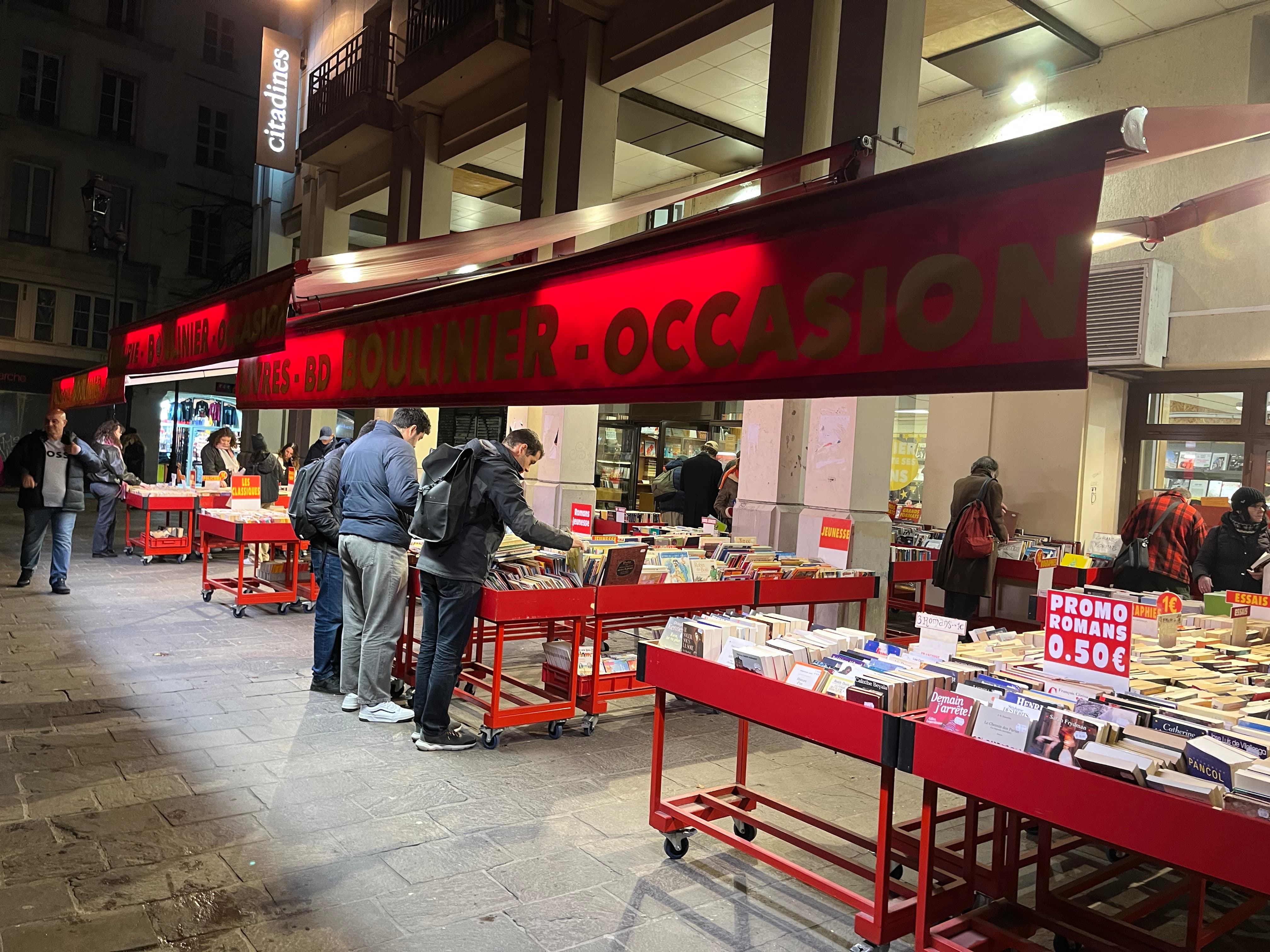
takeabreak vol.4では、PENTHOUSE GROOVE初のヨーロッパ遠征の様子をお届けします。とはいえ遠征とは名ばかりで、実際は初のヨーロッパ旅行で様々な文化や体験に触れた備忘録として一つ文章を認めてみたいと思います。
今回訪れたのはフランスとドイツです。PENTHOUSE GROOVEとしての様々な活動の中で世界中の音楽に触れてきましたが、今回は私自身初めて西洋の文化に実際に触れることができ、音楽に関してはもちろん様々な観点から知見を広げられるいい機会であったと思います。
まず音楽的な観点で言えば、島国の日本と異なり欧州では様々な文化が交わることによる多様性が感じられました。
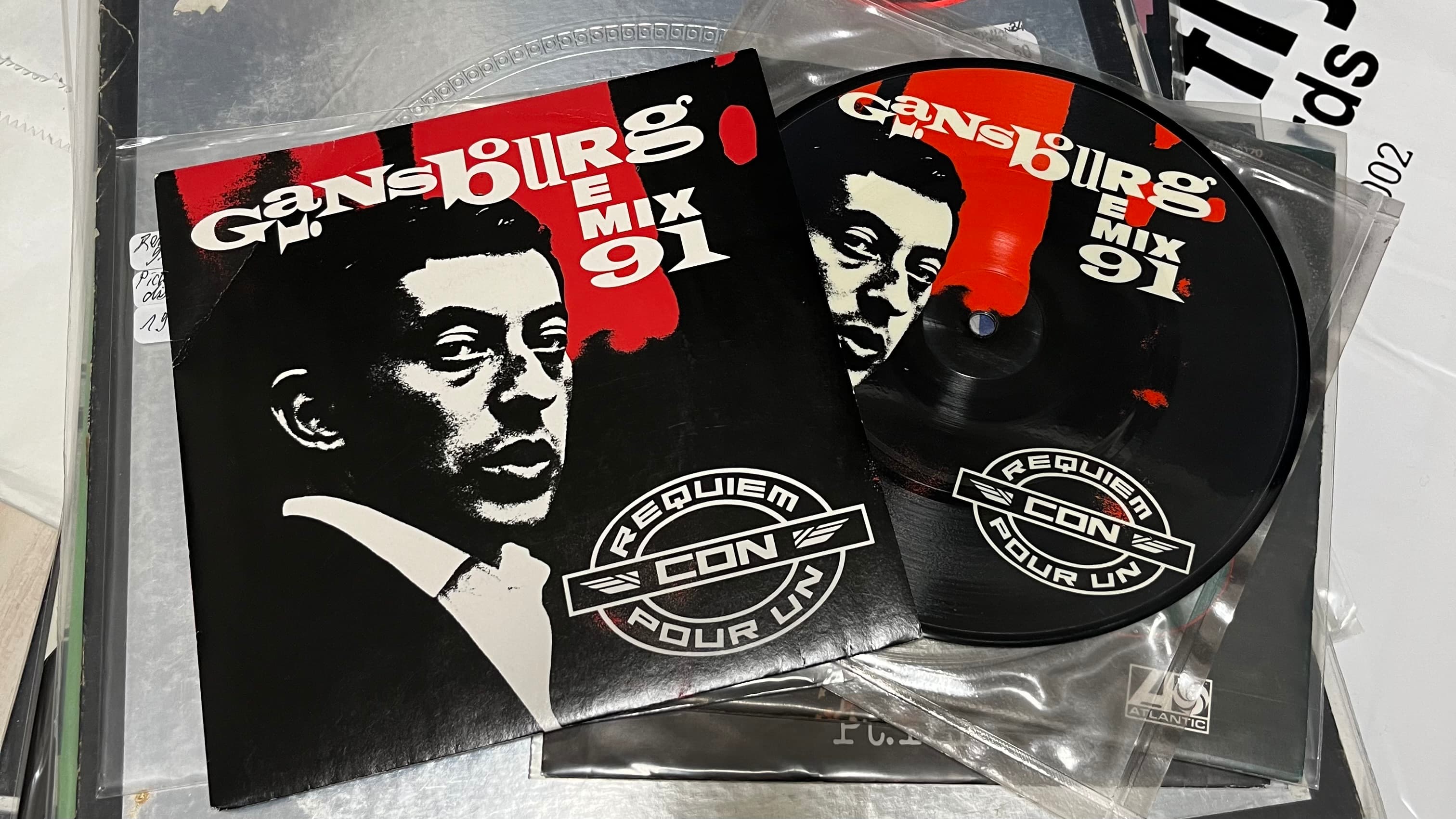
今回のヨーロッパ旅行で数々のレコード店を訪れましたが、例えばフランスではシャンソンやフレンチポップはもちろん、イタリアのライブラリーミュージックなど近隣国のものや、ブラジル音源のユーロ限定プレスなどがあり、様々な文化、需要がある欧州ならではのラインナップに感動を覚えました。
日本では入手困難なものがユーロ独自版で売っていたものもあり、一レコードファンとしても垂涎もののコレクションを目にすることができ貴重な体験になりました。
また音楽的な観点にとどまらず、こうした文化の多様性は今回の旅行の各所で見受けられました。
特にフランスでは様々な人種が行き交う街並みを幾度となく目にしました。
パリのような華やかな街だけでなく、観光客があまり足を運ばない土地にも多様性は見受けられましたが、そこには学びの側面もあるように感じました。
それは多様性による裾野の広さです。日本では日本語が話せない外国人とのコミュニケーションを難しいと感じる場面も多々あるかと思いますが、ヨーロッパでは様々な人種や文化の違いがあることに起因し、何者であっても、どんな文化を持つ者でも関係なくまず受け入れるといったような雰囲気が感じられました。
私の辿々しい英語でも快くコミュニケーションを取ってくれる現地のホテルの方やレコード店の方との会話の中で、他人との心の壁をつくらず人と接することを自然と自分も学び取って行けたような気がしました。
そんな学びもありレコード店の方と仲良くなることができ、棚には並んでいないレコードを紹介してくれるといった出会いもあり、たわいもない会話をできるようになったことが新しい出会いのきっかけを生んでくれるという学びもありました。
このような人との距離感はやはり日本では経験しづらい部分であり、海外へ出て自分も1人の外国人として色々な人とコミュニケーションを取ったからこその成長なのではないかと感じました。
この出会いや学びをPENTHOUSE GROOVEの活動にも活かすべく、今回私がヨーロッパでピックアップしたレコードを使用して12/28にイベントを開催します。
私がヨーロッパで得た出会いが、今回のイベントにお越しいただける皆様にとっても新たな発見や感動に繋がればいいなという思いで選曲させていただきます。
音楽が好きな方はもちろん、まだあまり詳しくないという方も、まずは一度足を運んでみると新たな扉が開けるかもしれません。そのようなイベントにできるように今回のイベントも尽力していきたいと思いますので、興味のある方はぜひお越しください。
P.S. 今回訪れた中で見つけたレコード店やおすすめのレコードを一部noteで公開しています。よろしければそちらもチェックしてみてください。こちらも皆様の新たな楽しみ、発見に繋がっていくと幸いです。
TAKE A BREAK Vol.4|Voyage de vinyles
In TAKE A BREAK Vol.4, we’re sharing highlights from PENTHOUSE GROOVE’s first Europe trip. It may sound like a “tour,” but in reality, this was my very first journey to Europe—and I’d like to write it down as a personal memo of the cultures and experiences I encountered along the way.
This time, I visited France and Germany. Through various activities as PENTHOUSE GROOVE, we’ve explored music from all over the world, but being able to experience Western culture firsthand for the first time gave me a great opportunity to broaden my perspective—not only in music, but in many other ways as well.
From a musical point of view, I strongly felt the diversity that comes from different cultures crossing paths in Europe—something quite different from island-nation Japan. During this trip, I visited many record shops, and in France for example, I found not only chanson and French pop, but also works from neighboring countries such as Italian library music, along with Europe‑only pressings of Brazilian recordings. The lineups were truly unique to Europe—where cultures and demand are incredibly diverse—and I was genuinely impressed.
Some records that are hard to find in Japan were available in Europe‑exclusive editions, and as a record lover, it was an invaluable experience to witness collections that felt almost mouth‑watering to browse.
Beyond music, this cultural diversity could be seen throughout the trip. Especially in France, I repeatedly came across cityscapes filled with people of many different backgrounds. Diversity wasn’t limited to glamorous places like Paris—it was also visible in areas that tourists don’t often visit, and it felt like there was something to learn from that as well.
What stood out to me was the breadth that diversity creates. In Japan, there are many moments when communicating with someone who doesn’t speak Japanese can feel difficult, but in Europe, perhaps because people come from many different cultures and backgrounds, I sensed an atmosphere of first accepting someone as they are—regardless of who they might be or what culture they come from.
Through conversations with hotel staff and record shop owners—who were kind enough to communicate with me even in my clumsy English—I felt like I naturally learned how to connect with others without building unnecessary emotional walls.
Thanks to that learning, I was able to become friendly with people at record shops. I even had encounters where they introduced records not displayed on the shelves. It reminded me that being able to share even small, casual conversations can become the starting point for new connections.
This kind of sense of distance between people is something I don’t often experience in Japan, and I felt it was a form of growth that came from going abroad and communicating as a foreigner myself.
To bring these encounters and lessons back into PENTHOUSE GROOVE’s activities, I will be hosting an event on 12/28 using records I picked up in Europe.
With the hope that the encounters I had in Europe can lead to new discoveries and inspiration for everyone who joins us, I’ll be selecting the music with care.
Whether you’re a serious music lover or someone who feels they’re not very knowledgeable yet, simply coming by might open a new door for you. We’ll do our best to make this event a welcoming place—so if you’re interested, we’d love to see you there.
note 別編集版 / Read on note
note には視点を変えた別バージョンも公開中です。あわせてお楽しみください。
We’ve also published an alternate cut on note—give it a read.
vol.3 The Art of Sampling

TAKE A BREAK Vol.3|The Art of Sampling
ちょっと一息つきたいとき、音楽だけでなくさまざまな話題を通して
皆様の日常にささやかな彩りを添えたいという思いで始めた「TAKE A BREAK」。
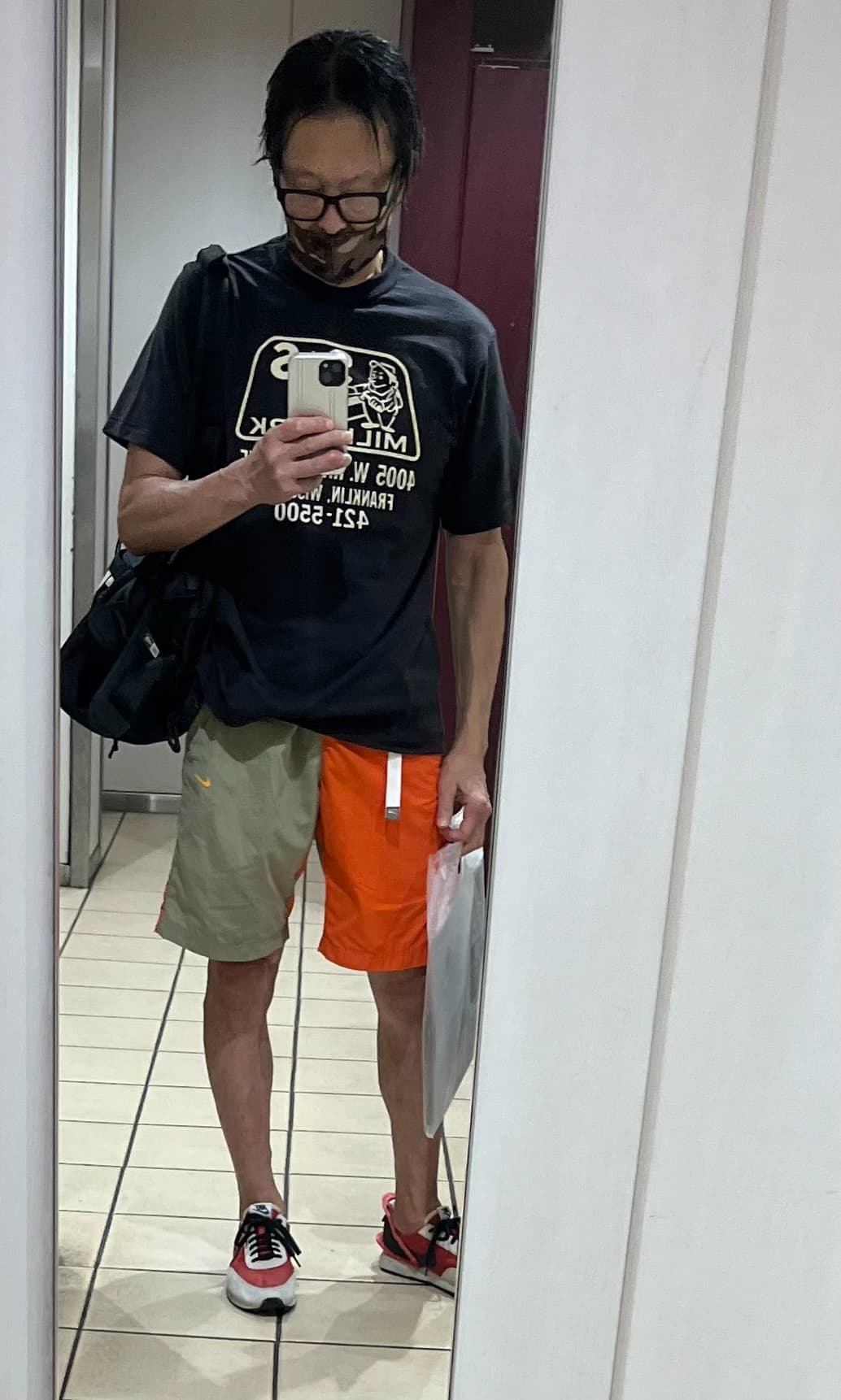
vol.3では、先日のイベント成功を記念して父にプレゼントしたウエアハウスのTシャツから、「サンプリングの美学」について考えてみたいと思います。
ウエアハウスはvol.2で紹介したジョンロフグレンと同様に、アメカジを日本の技術で再構築することで独自の存在感を放つブランドです。
今回父に贈ったのは「Lot.4601」というモデルのTシャツです。旧式のローゲージ編み機で編まれた生地は「吊り編み機よりも希少」と言われ、12番のムラ糸による陰影が“シャドウボーダー”と呼ばれる独特の風合いを生み出します。現代的な深い前下がりではなく、フライスにパイピングを噛ませることで強度を保ちつつ、着込むほどに自然な前下がりへと変化していくネックラインも特徴的です。
このTシャツは日本の技術を駆使した最高の着心地に加え、アメカジならでは魅力的なデザインのプリントがセットになっているところが最大の魅力です。
ウエアハウスのTシャツのデザインはどれも目を引くポップで魅力的なものが多いですが、その多くは本場アメリカの古着からサンプリングしているそうです。今回プレゼントしたTシャツも本場アメリカの業者Tシャツ(ミルワーク=木工内装業)のグラフィック言語をサンプリングして、実在の地名・番号体系を織り交ぜたWAREHOUSE流のデザインとなっています。
サンプリングの魅力は、元の素材をただ模倣するのではなく、探し出す過程と加工する過程でいかにオリジナリティを加えるかにあります。
この発想は音楽でも同じであるように感じます。その一例として、U.F.OのLoud Minorityがあげられます。これは日本のDJがサンプリングベースで曲を作成し、ロンドンでも大きな話題を呼んだ一曲で、父の名前もクレジットされています。
父からサンプリングソースを聴かせてもらったこともあり、この曲がいかに多様な素材を組み合わせ、工夫を凝らして加工し、ひとつの世界観にまとめ上げているかを実感しました。
『Loud Minority』ではジャズ、ファンク、ソウル、さらにはラテンやアフロの要素まで、膨大な音楽的断片がサンプリング素材として取り込まれています。単なる引用ではなく、ドラムのブレイクを切り刻んで再構築したり、ホーンやピアノの断片にエフェクトを加えることで、ジャズクラブ的な空気感とクラブカルチャーのビートを融合させています。そこには、原曲の文脈を超えて新しい質感を生み出すサンプリングの力が存分に発揮されています。
こうして音楽やファッションを通じて、サンプリングの奥深さ、そして「既存のものから生まれる新規性」に触れることができました。今回の学びを踏まえ、PENTHOUSE GROOVEからもサンプリングの美学を追求した新たなプロダクトが生まれるかもしれません。乞うご期待ください。
P.S
我々が作成しているTシャツも一部サンプリングを取り入れたデザインがあります。PENTHOUSE GROOVE流に再解釈し、オリジナリティを加えた自信作ですのでよろしければぜひチェックしてみてください。
https://pnthsgroove.base.shop
また、Xでは様々なサンプリング曲のソースを紹介するコーナーも設けています。よろしければそちらもぜひチェックしてみてください。新たな気づきや出会いがあるかもしれません。
https://x.com/PENTHOUSEG62161
我々の活動が音楽のみならず皆様の日常に新しい気づきや出会いをもたらすことができれば幸いです。
TAKE A BREAK Vol.3|The Art of Sampling
We launched the “TAKE A BREAK” series as a way to add a touch of color to everyday life through topics that go beyond music. In this Vol.3, I’d like to reflect on the art of sampling, starting with a Warehouse T-shirt I gave my father to celebrate the success of our recent event.
WAREHOUSE Lot.4601
Like John Lofgren, which we featured in Vol.2, Warehouse is a brand that reinterprets American casual wear through Japanese craftsmanship, giving it a distinctive presence.
The piece I gifted my father was the Lot.4601 T-shirt. Its fabric, knitted on old low-gauge machines said to be “rarer than loopwheel,” uses No.12 uneven yarn to create a shadow-like texture known as shadow border. Though plain at first glance, faint horizontal gradations emerge, adding a subtle depth to the fabric.
Another hallmark is the neckline. Instead of the deep, modern scoop, Warehouse uses ribbed piping that preserves strength while naturally relaxing into a graceful shape as the garment is worn over time.
The appeal of this T-shirt lies in the perfect balance between the authentic, vintage-inspired graphic design and the comfort born from Japanese textile expertise. It’s no wonder my father was delighted with it.
Sampling as a Concept
Warehouse’s T-shirts often feature bold, eye-catching prints. Many of these designs are sampled from vintage American garments. The one I gifted was no exception—borrowing the graphic language of a U.S. workwear (millwork) T-shirt, and reworking it with actual place names and phone number formats into a Warehouse-original design.
The beauty of sampling is not in simply copying the source, but in how originality is added—both in the process of discovery and in the process of transformation.
The Art of Sampling in Music
This mindset applies equally to music. A prime example is U.F.O.’s Loud Minority. Created by Japanese DJs, this track—built entirely on sampling—generated huge buzz in London. My father was also involved, with his name appearing in the credits.
I once had the chance to hear some of the sampling sources from him. That experience revealed how the track pulls from such a diverse range of materials, weaving them together through inventive edits to form a seamless musical world.
In Loud Minority, fragments of jazz, funk, soul, and even Latin and Afro rhythms are layered into the fabric of the song. Far from simple quotation, the group re-chopped drum breaks to reconstruct grooves, applied effects to horn stabs and piano riffs, and blended them into a sonic collage that merges the atmosphere of a jazz club with the energy of club culture. Here, sampling’s true power—to create new textures beyond the original context—shines through.
Newness from the Existing
Through both fashion and music, I’ve come to appreciate the depth of sampling—the idea that fresh originality can emerge from what already exists. Building on this realization, perhaps PENTHOUSE GROOVE will one day release its own products inspired by the art of sampling. Stay tuned.
P.S.
Some of our own T-shirts also incorporate sampling in their designs. Reinterpreted through the PENTHOUSE GROOVE lens, they embody our take on originality. We’d love for you to check them out:
👉 PENTHOUSE GROOVE BASE SHOP
We’ve also started a corner on X where we share sampling sources behind various tracks. It might spark new discoveries or encounters, so please have a look:
👉 PENTHOUSE GROOVE on X
We hope our activities can bring not only music, but also new inspirations and connections to your daily life.
note 別編集版 / Read on note
note には視点を変えた別バージョンも公開中です。あわせてお楽しみください。
We’ve also published an alternate cut on note—give it a read.
vol.2 Crossing Culture
ちょっと一息つきたいとき、音楽だけでなくさまざまな話題を通して
皆様の日常にささやかな彩りを添えたいという思いで始めた「TAKE A BREAK」。今回は、ファッションと音楽、2つのストーリーから“越境する魅力”について考えてみました。
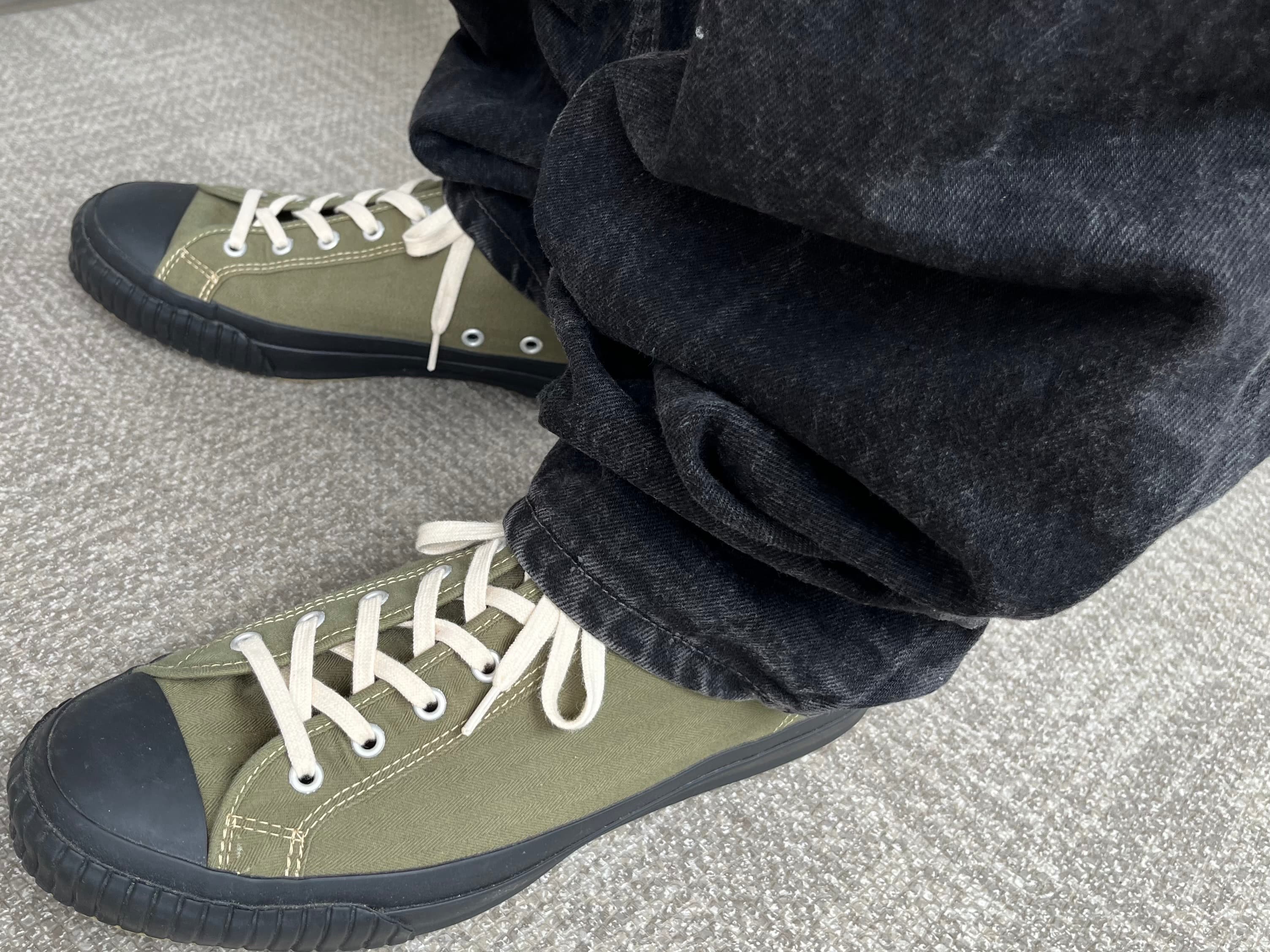
先日、誕生日に父からJOHN LOFGREN BOOTMAKERのスニーカーをプレゼントしてもらいました。アメリカの伝統的なデザインをベースに、日本の職人技によるオリジナリティが光る一足です。
「本場の空気感を、いかに日本流でアップデートできるか」というブランド哲学に、単なる模倣を超えた“自分たちらしさ”を表現していることに感銘を受けました。
一方で、日本のものが海外で再解釈されている例もあります。
その一例として、半世紀以上前のものにはなりますが高度経済成長黎明期にリリースされた「上を向いて歩こう」が挙げられます。
最近近所のレコード店を訪れた際に「Sukiyaki」のタイトルでさまざまなアーティストのカバーを見つけ、ふと「なぜスキヤキというタイトルなんだろう?」と疑問が湧きました。
調べてみると、「日本のご馳走であるすき焼きをお腹いっぱい食べれば自然と上を向く」というのが由来だそうです。
そんな由来に加えエキゾチックな響きも手伝って、日本だけでなく海外でも愛される曲となっています。
この曲はアメリカでもNo.1ヒットを記録し、マーティン・デニーをはじめ世界中のアーティストが
独自のアレンジでカバーしてきました。
原曲の郷愁感が、国やジャンルを超えて広がっていくのを目の当たりにすると、国内外で愛される「日本発のカルチャー」も確かに存在することを実感します。
これらのことから、ファッションも音楽も単に誰かを真似るだけでなく、自分たちの文脈や感性を重ねることで新たな個性や深みが生まれることを再認識しました。
一方で、国やジャンルを越えてなお、変わらず受け継がれていく本質的な美しさもあるということを実感する今日この頃でした。
TAKE A BREAKページで気になった方は、メインページもぜひご覧ください。
PENTHOUSE GROOVEでは、これからもファッションや音楽などさまざまなカルチャーを通して
世界と日本の奥行きある魅力を様々な角度から紹介していきたいと思います。
「こんなコンテンツも見てみたい!」というリクエストもお待ちしています。
今後ともよろしくお願いいたします。
P.S. このような越境する魅力を発掘すべく、PENTHOUSE GROOVEのXでは様々な曲のカバーを紹介しています。レコメンド曲も毎日発信中です。お手隙の際にぜひご覧ください。
X(Twitter)
Whenever you need a little break, we hope this “TAKE A BREAK” section brings a touch of color and inspiration to your daily life—not just through music, but through a variety of stories and topics. This time, we reflect on “the appeal that crosses borders,” as seen through the lens of both fashion and music.
Recently, I received a pair of JOHN LOFGREN BOOTMAKER sneakers from my father for my birthday. These shoes are rooted in traditional American design, but shine with originality thanks to Japanese craftsmanship. I was deeply impressed by the brand’s philosophy: “How can we update an authentic American vibe in a uniquely Japanese way?”—a reminder that true style means going beyond imitation and expressing our own sensibility.
On the other hand, there are also many cases where Japanese creations are reinterpreted and celebrated overseas. One example—though it dates back more than half a century, released at the dawn of Japan’s high‑growth era—is “Ue o Muite Arukou.” The other day, I stopped by a local record shop and found covers of this song by various artists, all under the title “Sukiyaki.” It made me wonder—why “Sukiyaki”? After some research, I learned that the name comes from the idea that after enjoying a hearty meal of sukiyaki, you naturally look up with satisfaction. This playful, exotic name helped the song gain popularity not just in Japan, but around the world.
“Sukiyaki” became a No. 1 hit in America, and has been covered in unique styles by artists such as Martin Denny and many others across the globe. Seeing the original melody’s nostalgic charm resonate across countries and genres, I’m reminded of the enduring impact of Japanese culture worldwide.
Through these stories, I’ve come to appreciate once again how both fashion and music gain new depth and individuality—not just by imitation, but by layering in our own context and sensibility. At the same time, there is a universal beauty that remains, no matter how cultures or genres shift.
At PENTHOUSE GROOVE, we hope to continue sharing the richness and depth of both global and Japanese culture from many different perspectives, through fashion, music, and beyond.
If there’s something you’d like to see featured here, let us know!
Thank you for your continued support.
P.S. On PENTHOUSE GROOVE’s X (Twitter), we share all kinds of unique cover versions from around the world—plus daily music recommendations. Feel free to check it out when you have a moment!
X (Twitter)
ファッションやレコード、世界のカバー曲、カルチャーコラムなど
「音楽」だけにとどまらないPENTHOUSE GROOVEの全コンテンツは
メインページはこちら
Explore more: Main PENTHOUSE GROOVE page – Music, Fashion, Records, Global Covers, Culture
vol.1 How to make steel pan
音楽以外にも、ファッションやカルチャー、アートなど幅広いテーマも今後取り上げていきます。
ちょっと一息つきたいとき、音楽に限らず気軽に楽しめるコンテンツやコラムをお届けできればと思い、この「TAKE A BREAK」コーナーを新設しました。
記念すべき第1回では、最近見つけた「スティールパンの作り方」の動画をご紹介します。
スティールパンはカリブ海・トリニダード・トバゴ発祥の打楽器で、ドラム缶を叩いて成形し、ひとつひとつ手作業で音階が作られていきます。
先日、初めてヤン富田さんのライブを観る機会があり、あらためてスティールパンの音色の持つ心地よさと神秘性に感銘を受けました。
この動画を通じて、そのアナログで繊細な製造工程に触れることで、スティールパンが持つ“デジタルには再現できない温もり”を再認識しました。
この体験から、デジタル社会となった現代だからこそ、古き良きものを見つめ直し、新しい感性とつなげていくこと、すなわち「古きを温め新しきを知ること」の大切さを改めて感じました。
今後もアナログとデジタルの両面から、PENTHOUSE GROOVEらしいコンテンツをお届けしていきたいと思っています。
これからも不定期ではありますが、音楽に限らずさまざまなコンテンツを紹介していく予定ですので、「こんなものを取り上げてほしい!」というリクエストがあれば、ぜひ教えてください。
これからもPENTHOUSE GROOVEをよろしくお願いいたします。
In addition to music, we will be sharing topics on fashion, culture, art, and more in the future.
We created this “TAKE A BREAK” corner as a space where you can unwind and enjoy light, casual content—not limited to music—whenever you need a little breather.
For our very first post, we’d like to share a fascinating video we recently found: “How to Make a Steel Pan.”
The steel pan is a percussion instrument that originated in Trinidad and Tobago in the Caribbean. Each one is handcrafted by hammering oil drums into shape and tuning them by hand to create musical notes.
The other day, we had the opportunity to see a live performance by Yan Tomita for the first time, and were deeply moved once again by the soothing and mysterious tone of the steel pan.
Watching this video, we were reminded of the analog craftsmanship behind the instrument—and how its warmth is something that simply can’t be replicated by digital means.
This experience reinforced the importance of rediscovering the value of analog in today’s digital world—an appreciation of the old that leads to new insights.
Going forward, we hope to deliver content that reflects both analog and digital perspectives in the spirit of PENTHOUSE GROOVE.
We’ll continue to update this page irregularly with a variety of content beyond music. If there’s something you’d like to see featured, don’t hesitate to let us know.
As always, thank you for supporting PENTHOUSE GROOVE.